
Traditional building techniques of Asturia
July 7, 2026
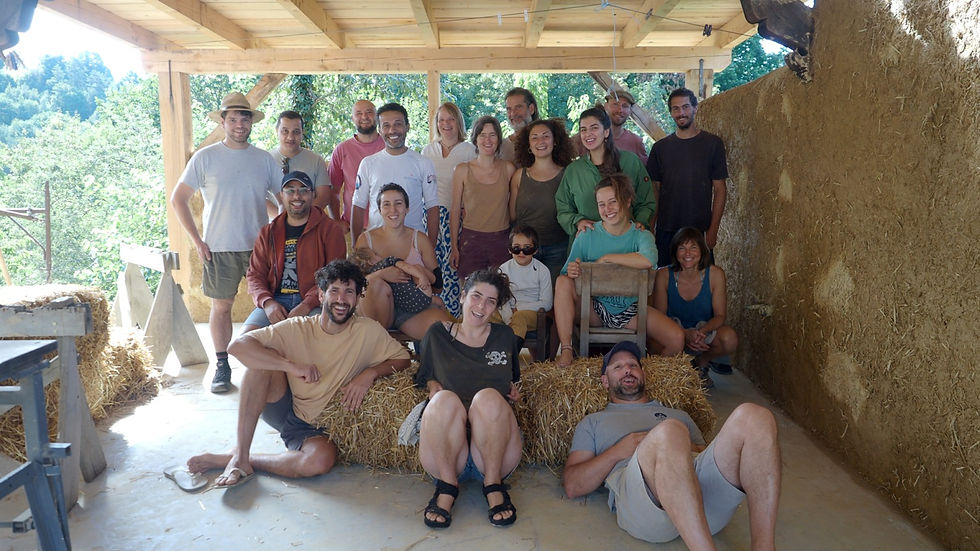
Organized by the Spanish association Creando Floresta, I had the opportunity to participate in the two step training course Clay and Straw as a key, where around 20 people from Egypt, Spain, Italy, Sweden, France and Slovenia gather to learn and practice different techniques to build with natural material.
In the first training we discovered traditional Asturians techniques to build wooden infrastructure, using local materials that we could find in the surrounding forest. The most important technique was called cebatu, a traditional way to braid and intersect the young hazelnut tree branches in order to create a wall to fill with different cob mixes and shapes.
Moreover, we experimented with different techniques with straw and clay to fill in the structure, using different types of mixes to make cob, barbotina, cob and lime bricks. In this way we had the possibility to put in practice ancient ways to build in order to create a small workshop for different types of crafts.


In the second training we met the Slovenian association Zavod Veles, with whom we had the chance to experiment more techniques with straw bales and clay. We focused on practical activities to restore an ancient Slovenian traditional building in order to make a new common space for the activities that the association carries out. We made our own cob and learnt how to put up straw bales in order to create a stable structure.

After the first training I came back to Sunseed and I took the opportunity to build the structures for the Festival en Defensa del Rio Aguas with the techniques I learnt in the project in Asturias. The community used the most present local material, caña, as it happened in previous years, to create shadowing structures: we made arches and supporting structures for nets, and I implemented the cebatu technique to build a roof for the bar at the Festival site.
This experience gave me a lot of insights not only about traditional bioconstruction, but also inspired me to implement different ways to be sustainable in our life, as individuals and inside a community. Later more people adopted the cebatu technique to create fences in the gardens in order to protect the harvests from the wildboars in the area.


Comments