
Pickling vine leaves at Sunseed
Updated: Aug 18
July 31, 2025
Author: Raphael Prautzsch
I’m Raphael, and I spent three months — from April to July 2025 — at Sunseed as a gardens intern. During this time, I took part in the core tasks that keep the gardens healthy and productive: planting, transplanting, weeding, composting, watering, seed saving, and harvesting. It was a hands-on experience that deepened my understanding of ecological gardening and sustainable agriculture.

In addition to the regular garden work, I carried out a small project that connected to my academic background. Before joining Sunseed, I had written my bachelor thesis on the sustainability of different value chains for pickled vine leaves.
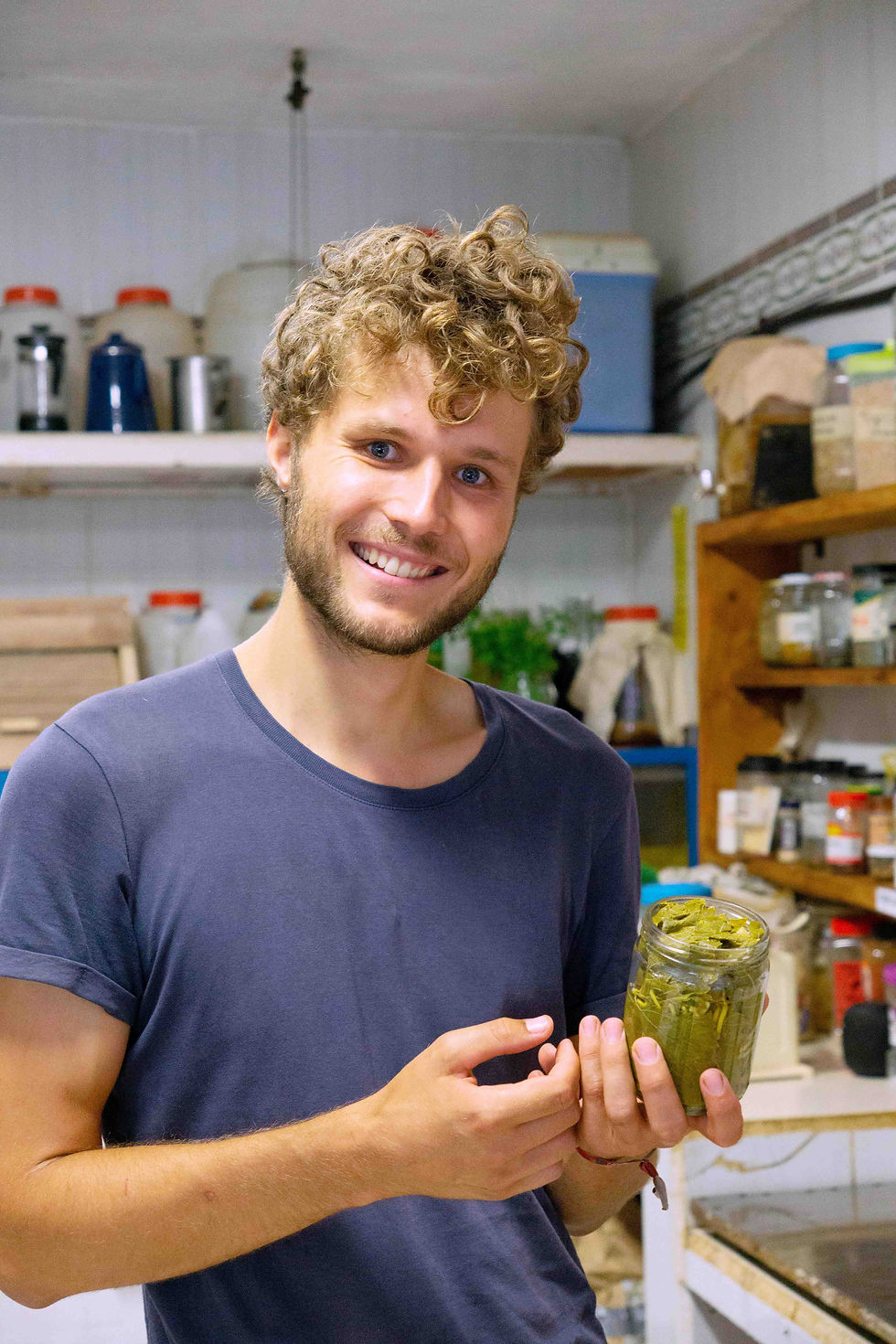
Since the vine in Sunseed grows organically, it offers the perfect opportunity to explore pickling vine leaves without the concerns often associated with conventionally grown leaves — such as pesticide residues. Some commercially available products have been found to contain pesticide residues exceeding legal limits, or even substances that are not approved for use in the EU at all (Hayar et al., 2021; Ökotest, 2023)

You can use pickled vine leaves as a pizza topping, in a salad or pesto, or in the traditional way by filling them with grains (typically rice), lentils or soy chunks.
Vine leaves are not only tasty but also rich in valuable nutrients: fiber, organic acids, vitamins (A, C, K), minerals (calcium, iron, magnesium), and bioactive compounds like polyphenols and phytosterols. These give them antioxidant, antimicrobial, and anti-inflammatory properties (Cangi et al., 2019; Gülcü et al., 2020; Kunter, 2022)
A key part of sustainable food systems is using land efficiently — what’s called ecological intensification or multiple use of agricultural areas (Tittonell, 2014). Vine leaves fit perfectly into this idea because they provide an additional product alongside the grapes.
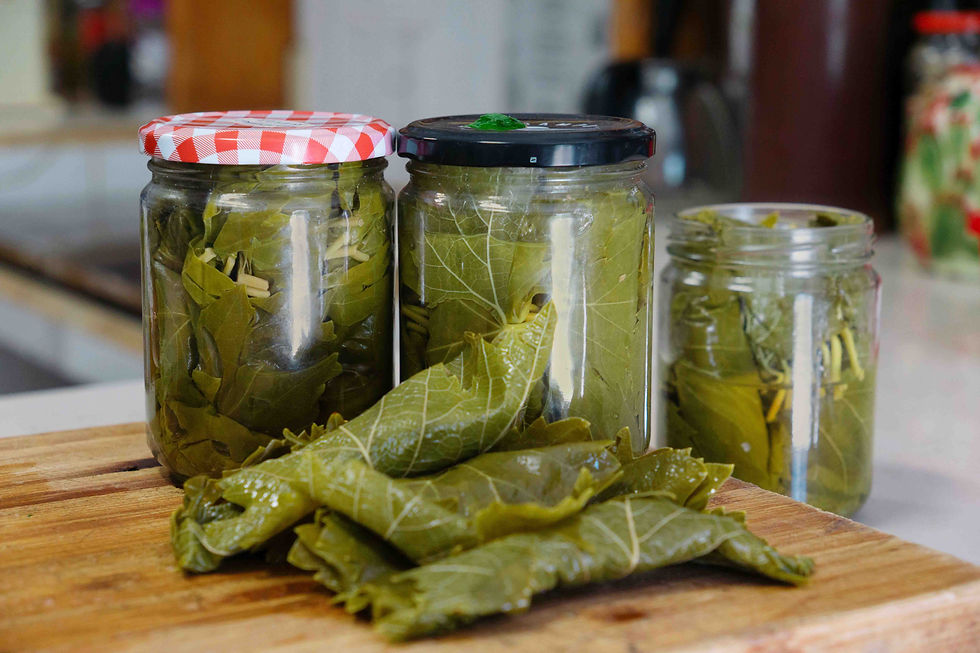
Here’s how I prepared and preserved the vine leaves:
Start by harvesting the vineleaves. Best is to harvest after the plant’s early growth but before the grapes ripen, so around May/June. The best leaves for stuffing are large yet tender ones: usually the 4th, 5th, and 6th leaves from the tip of the shoot. Only pick undamaged leaves. Picking is best done in the early morning, so that the leave is still fresh. The front patio vines produced particularly good leaves — large and soft — while the leaves from the Patch or Newlands gave smaller, tougher leaves that however still worked well for pickling.
Wash the leaves and remove the stems.
Blanch them in a brine solution (0.5% citric acid, 1% salt) for about 30 seconds.
After, cool them quickly in cold water, roll small stacks of leaves together and packed them gently into sterilized jars.
Cover them with a stronger brine (3.5% salt + 0.5% citric acid). You can also add some herbs or other spices to the brine. Close the jar.
Finally, pasteurize the jars by heating them in water at 90°C for five minutes to ensure long shelf life. Make sure the jars don’t stand directly on the bottom of the pot and that the water only goes just under the lid.
Store in ambient temperature for up to one year, after opening store them in the fridge and use them quickly.
You can use this recipe for example, search for others or just be creative as always in sunseed kitchen


Comments