Your address will show here +12 34 56 78
Sunseed News

Another year, 2024, is gone and we wanted to take stock of the activities we have carried out as a community over the last few months. These months have been a period of learning, achievements, and connections. We want to share the highlights and tell you what’s next in 2025.
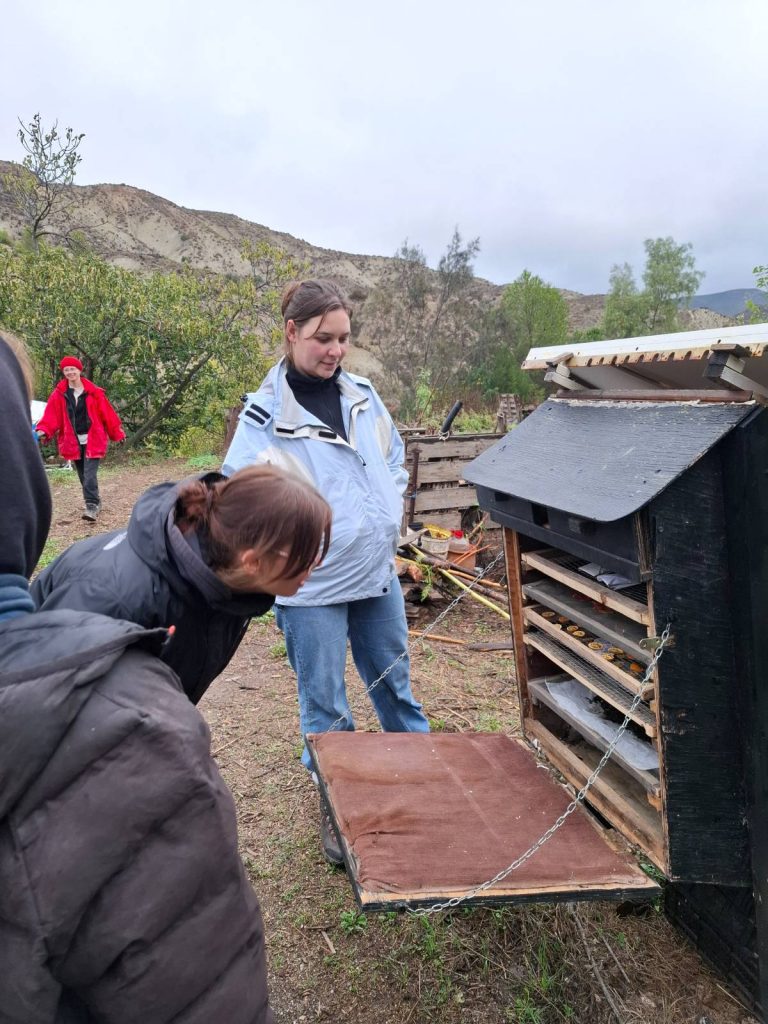
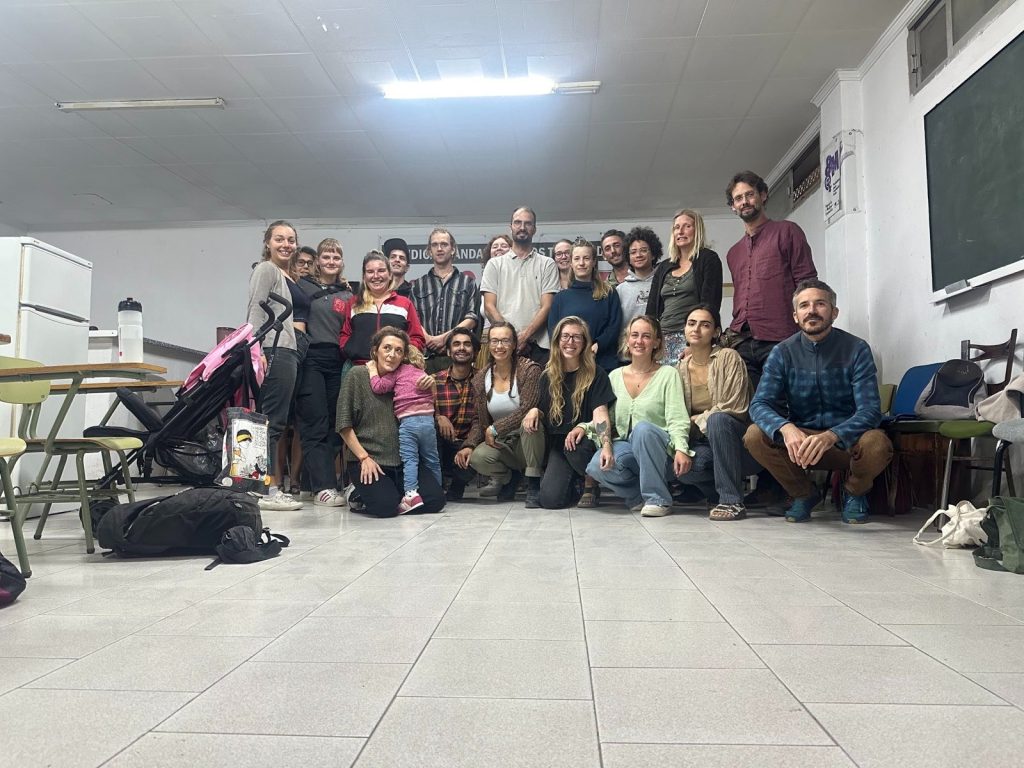
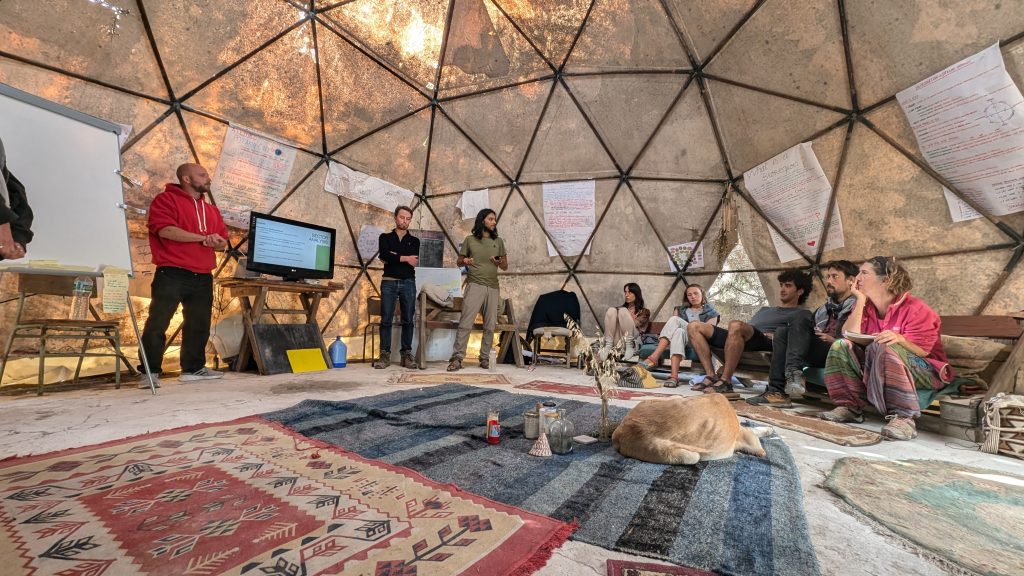
These last few months of activities went by very quickly, from welcoming our previous cycle of volunteers in November to improving the hay shed (where the eco-maintenance team explained how to mix mud and other ingredients to make it as good as new) to restoring the living room floor in the main house and adding a small reading and sitting area just below the stairs. On the more pedagogical side, we had many presentations and educational activities, including a session from the drylands department showing us the different plants we have in the drylands nursery, a presentation on the social situation in Colombia by Erika, our new communications coordinator, and a final presentation by one of our outgoing trainees, Gerko, on his research in seed conservation over the last 4 months.

A Creative Group

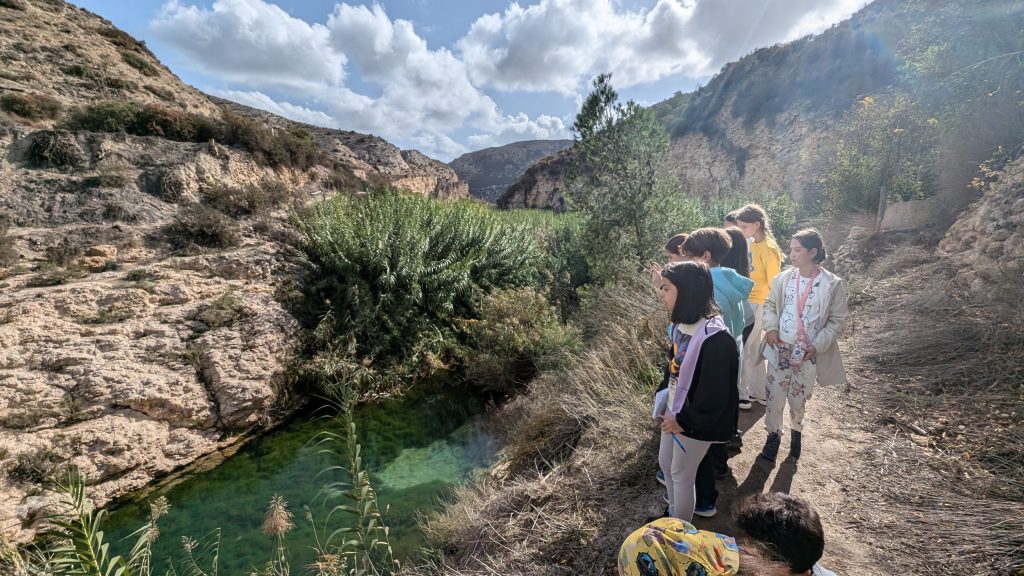
Our Drylands assistant Paula, apart from being a joyful and committed woman with local seeds and knowledge of the whole process of watering and planting them at the right time, has also led activities such as the renovation of the stone bridge connecting the passage from the poza to the far side of the valley.
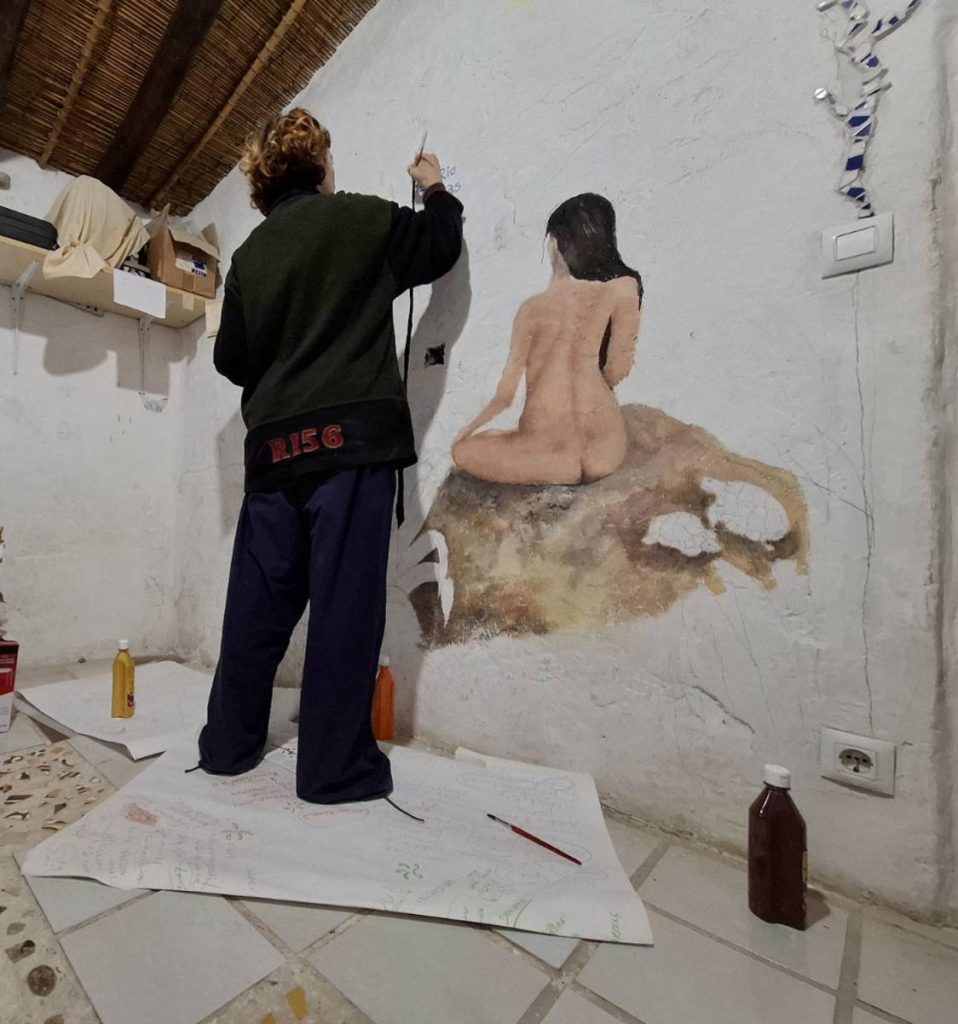
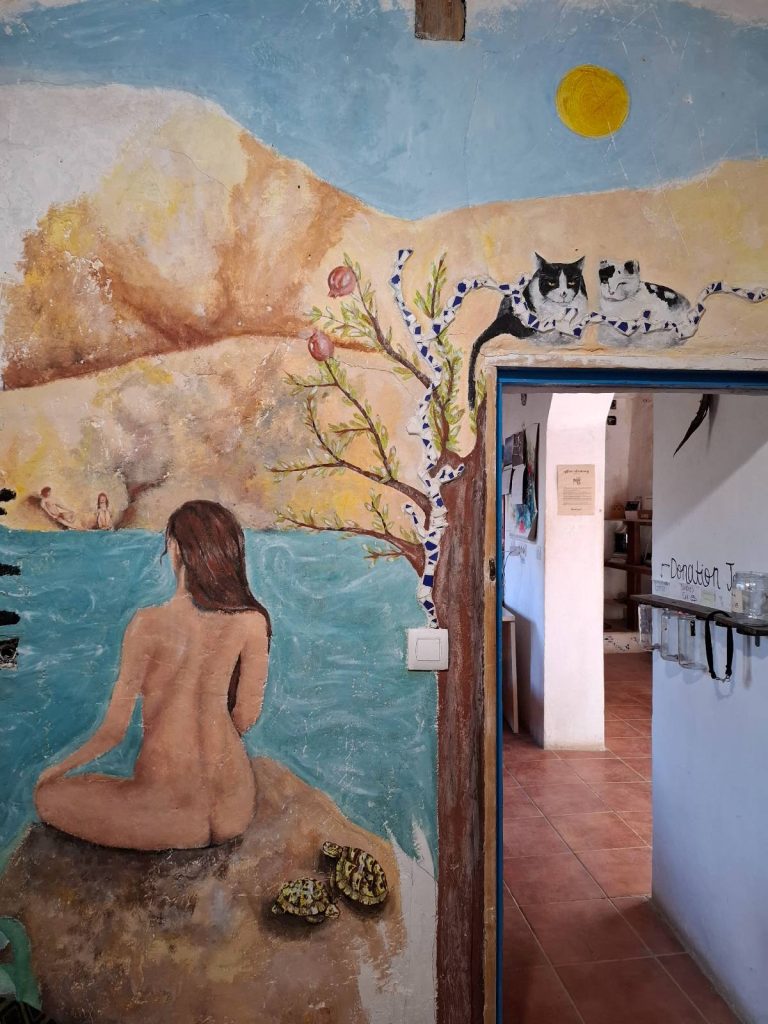
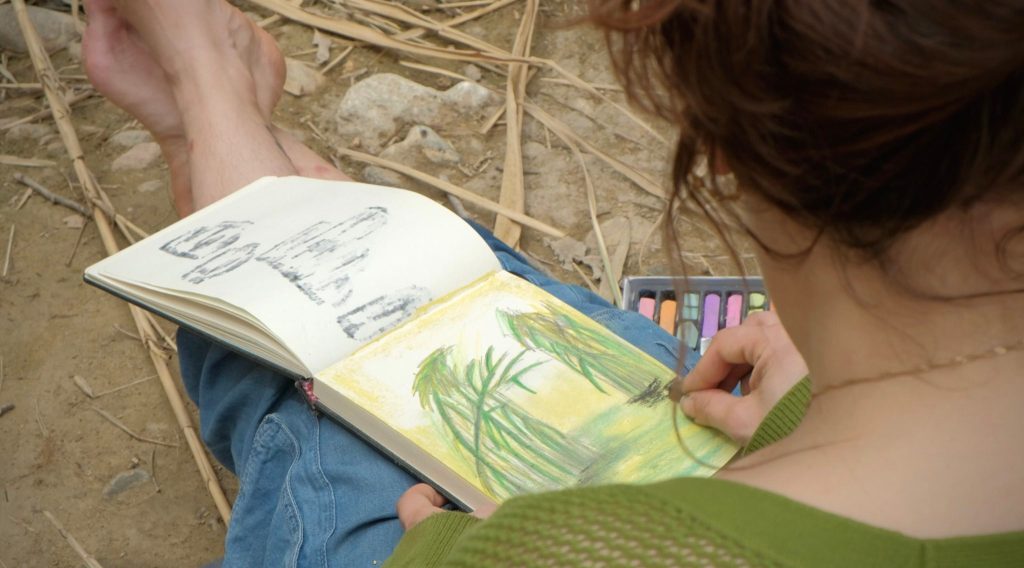
In her last weeks in the project she has started a mural with other creative volunteers in our little study room. We love a renovation project! 

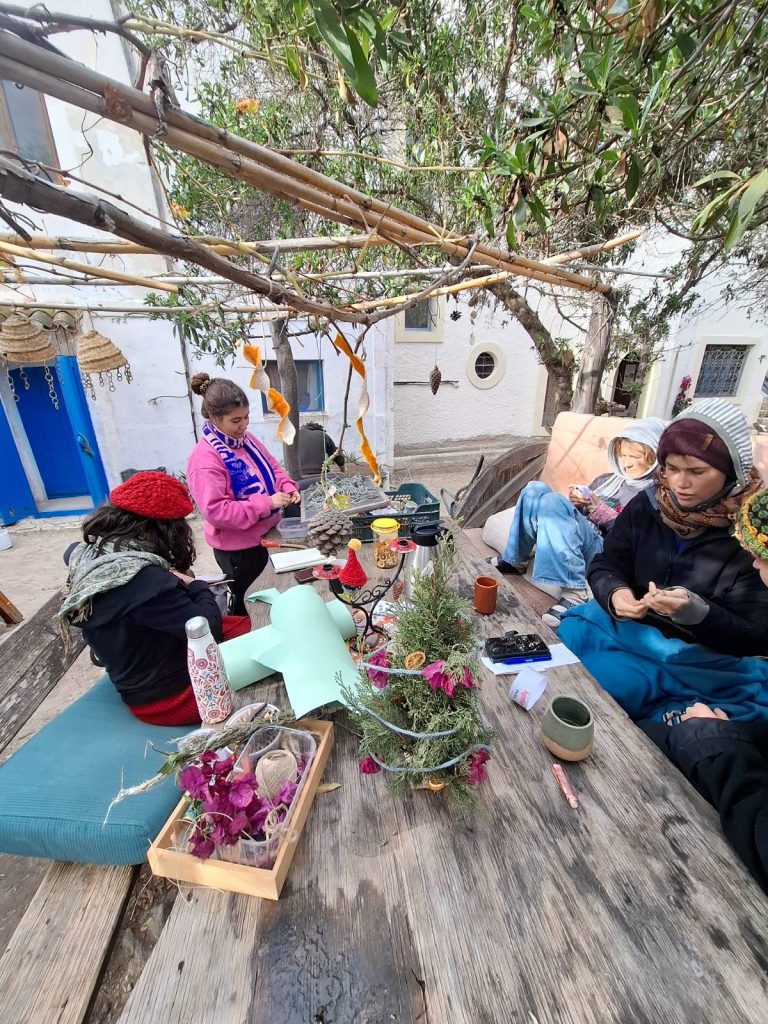
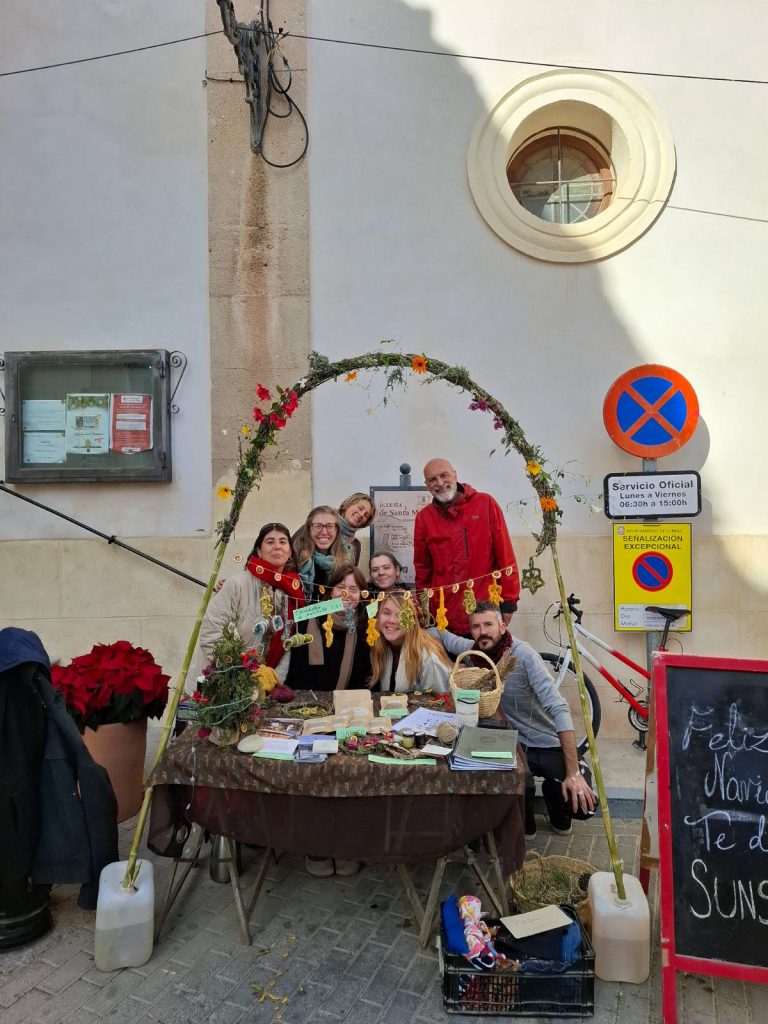
One of our last community activities was organizing our stand for the market in Sorbas. For this, Eli, our sustainable living coordinator, had, weeks before, generated several meetings with volunteers and ESC to make crafts and handicrafts to offer to the public, as well as bring teas, soaps, and organic incense, another part of the team of gardens and Eco maintenance helped to install the table and arches of the stand, and why not? Bring flowers as decoration on the same day of the activity.
We have also begun an enormous construction project – the rebuilding of Geoff’s! The project, led by our fantastic builder/neighbour Graham (who you may remember did the renovation of the office several years ago) is once again in charge.
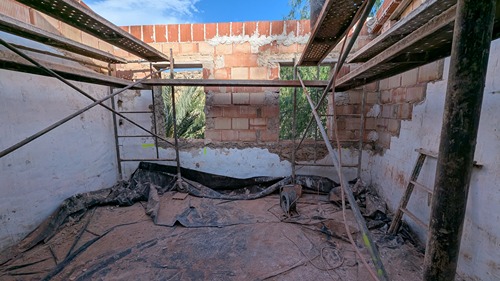
The roof is now completely off and the floors of the free shop and upstairs bedrooms are all being replaced. The work should go until February, and we cannot wait to see the final outcome! 
0

Audio and Video, Drylands Management, Sunseed Stories
In this article, we want to share with you the artwork of Anouk, a former drylands assistant, that she made during her stay on the project and how, from her perspective of living in a community, the activities she did daily and the knowledge gave her more tools to make us more aware of nature and the importance of the poza (natural pond) that has so much meaning for Sunseed.

Here is what she wrote about the concept of the video and her thoughts:

The video that I made is an experimental audio-visual piece that explores the ways in which we are in conversation with our environment. By experimenting with alternative filmmaking methods, I aim to capture the more-than-human experience of the surrounding drylands of Sunseed in order to expand and disorient our human gaze. The name of the piece, ‘Can I See Through You’, signifies the question that guided me through this process. The ‘You’ in the title is referring to all the nonhuman elements in the environment you can imagine, think of the ants, the gypsum, the clouds (or the lack of them), the trees and even the spirits.

You might wonder why putting all this effort in empathizing with rocks and insects and trying to capture their perspective is of any value. In the end the video that I made consists of vague images and dubious sounds without a clear message to take away from it. Nevertheless, I think there is real value in expanding and disorienting our human perspective. One of the root causes of why we are facing a multifaced climate crisis, is fundamentally that at some point in history we have come to see ourselves as something separate from and even superior to the rest of nature. Most filmmaking methods represent this anthropocentric approach. When the climate crisis is portrayed in film, it is often done with the use of dramatic storylines, a narrator whom we can sympathize with and some experts who present some factual information. Moving away from this human perspective and using other filmmaking methods that focus on imagining what life must be like from the more-than-human perspective, gives us the chance to attune to nonhuman lifeworld’s. This opens up our understanding to the rather slow form of violence that is induced by destructive human activities. The damage that is being done to our planet is a slow kind of violence because much of it occurs indirectly, gradually and out of sight.

The video is meant to be projected on the rocks next to the poza, partially in order to connect the recorded footage with the present moment, but especially for the purpose of enhancing the sense of disorientation of our human perspective on this world. It might bother you to not exactly understand what you are seeing, or you might get curious about what the video actually looks like, but this confusion or discomfort is entirely the purpose of the experience. I believe that film is capable of producing knowledge, not just representing it. So with this video I’m not so much putting forward a certain vision or idea. The aim is to create an experience, in which you can make your own interpretations, come up with your own questions and draw your own conclusions.

This part I recommend you to read only after you’ve seen the video, so you can watch it unbiased and make your own interpretations.

There are two main ideas I worked with in this video. The first part of the video is inspired by a talk I heard in which someone explained how in pre-literate times, we saw the human mind not as anything different than a streaming river or the changing weather. Constant change, appearing and disappearing. I very much liked this idea, to realize that also the thoughts we have are natural phenomena. The gibberish whispers represent thoughts, of which rather often the content is quite unimportant, yet they can be overwhelmingly loud. But then the whispers quiet down. After our minds have wandered in all directions, finally it becomes silent and that is the moment that we can tune into our environment. The breathing, the sounds of the environment and the visuals are harmonized. I came to this idea mostly because I had a ridiculous amount of zooming footage and I was trying to figure out what to do with this. At some point I made the connection between the zooming and the breathing. Then I realized that breathing together with the environment, sonically and visually, was very much in line with this idea of attuning with the nonhuman experience.

This short video was made in a very short time-span and is just one experimentation of how you might capture the more-than-human experience. But the entire process of making the video might actually be the most interesting part. So I would encourage anyone to pick up a camara, you’re phone will do perfectly too, make some sound recordings, try to attune to your environment and see what you come up with.

If you’re interested in experimental filmmaking methods that aim to capture the more-than-human experiences, you can check out Isabelle M. Carbonell’s PhD dissertation. It’s a long read which I still by far haven’t finished, but has fascinated and inspired me completely. You can find it on the internet when you look for: Isabelle M. Carbonell Attuning to the Pluriverse.

We hope you enjoyed the reading. Leave us your comments on what you think about the video.

0

Courses and Events

pdc sunseed
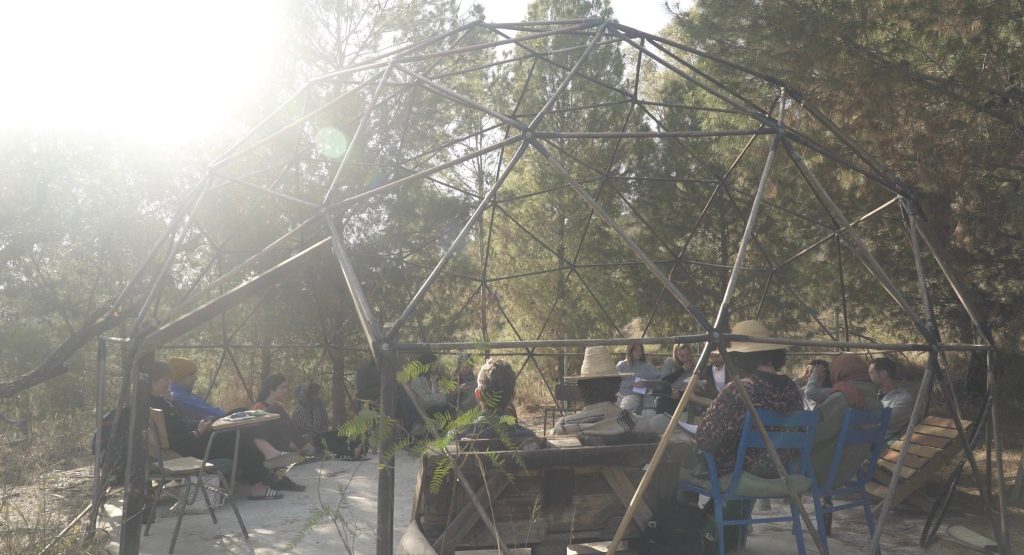
From October 4-19 2024 Sunseed hosted our first Permaculture Design Course in more than 4 years! For just over two weeks, 10 permaculture enthusiasts from around Europe joined the Sunseed community to learn about the various aspects of permaculture design, focusing on how to design sustainable communities and regenerative ecosystems in the desert.

making tables pdc sunseed

Permaculture ethics, principles, and design techniques were first used to develop sustainable agricultural systems as an alternative to the growth of agro-industry and the consumer economy. From these beginnings, the concept of Permaculture has expanded and diversified to cover nearly all types of human-based systems.

sunseed permaculture design course 2024

permaculture design course spain almeria

Permaculture design courses have been developed as an introduction to this way of thinking, teaching the tools and techniques needed for participants to design their sustainable systems. These courses are taught through both theory and practice and weave in both ancestral knowledge and recent discoveries.  At Sunseed we showcase many examples of Permaculture in practice, so it was a joy to bring another PDC to life this autumn.

drylands nursery sunseed permaculture design course
making tables pdc sunseed

In this two-week PDC, the instructors taught  the basic curriculum as set out by the UK Permaculture Association and supported by the Southeastern Spanish Permaculture Network (REPESEI).

permaculture course spain

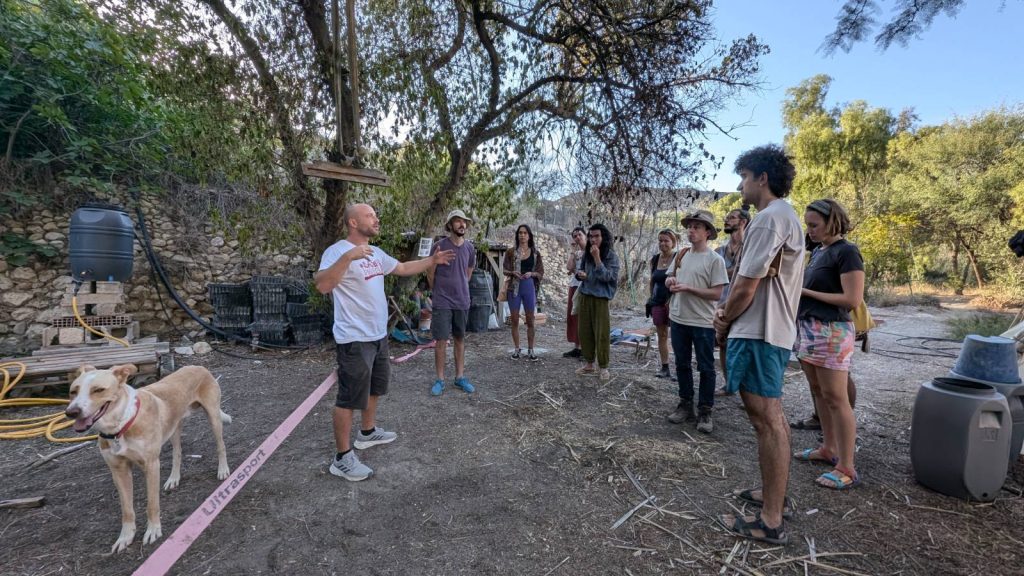
The course took place in a real context, in which participants had the opportunity to gain first-hand knowledge of how, in Los Molinos, we harvest water, regenerate soil, plant trees and grow vegetables in a desert environment following Permaculture principles. During the course,they also addressed aspects of social permaculture, focusing on care of the self, community living, equitable participation, and effective decision-making models. 

cob making sunseed course 2024

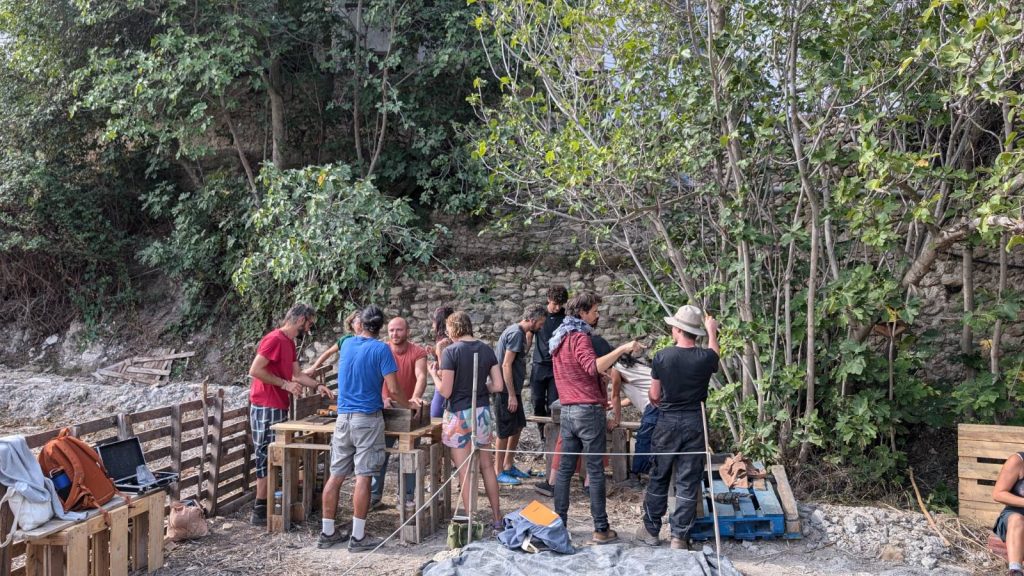
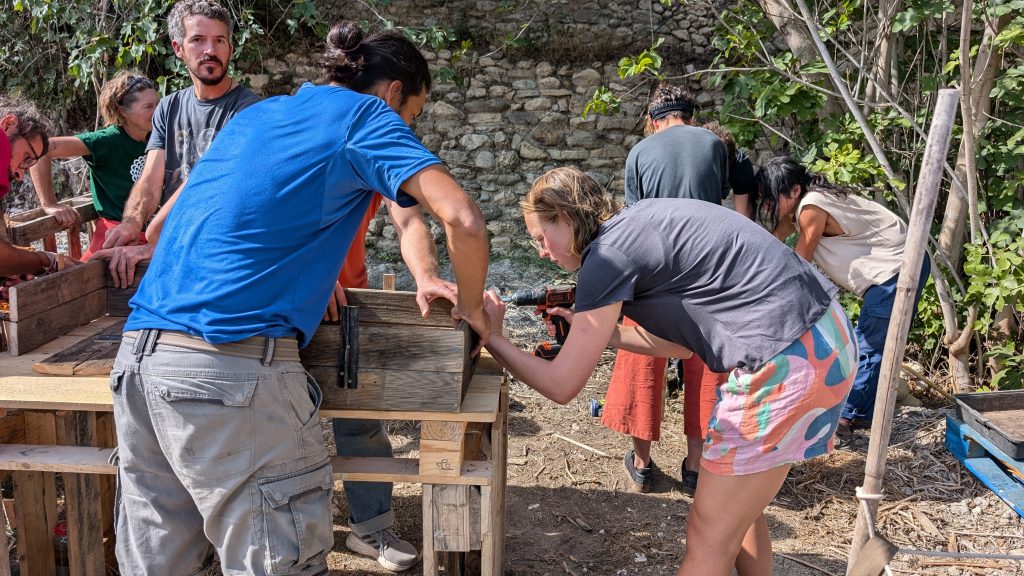
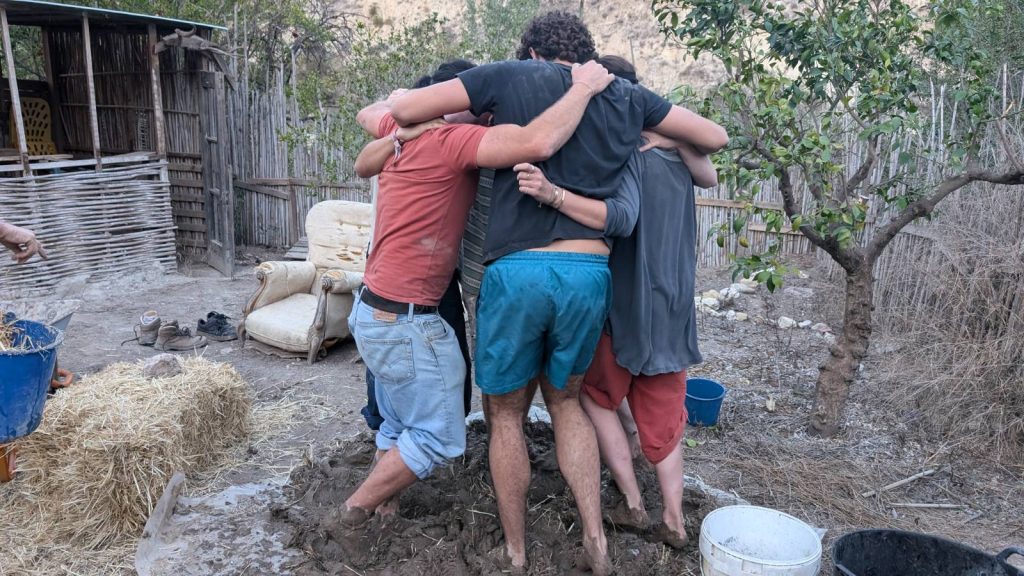
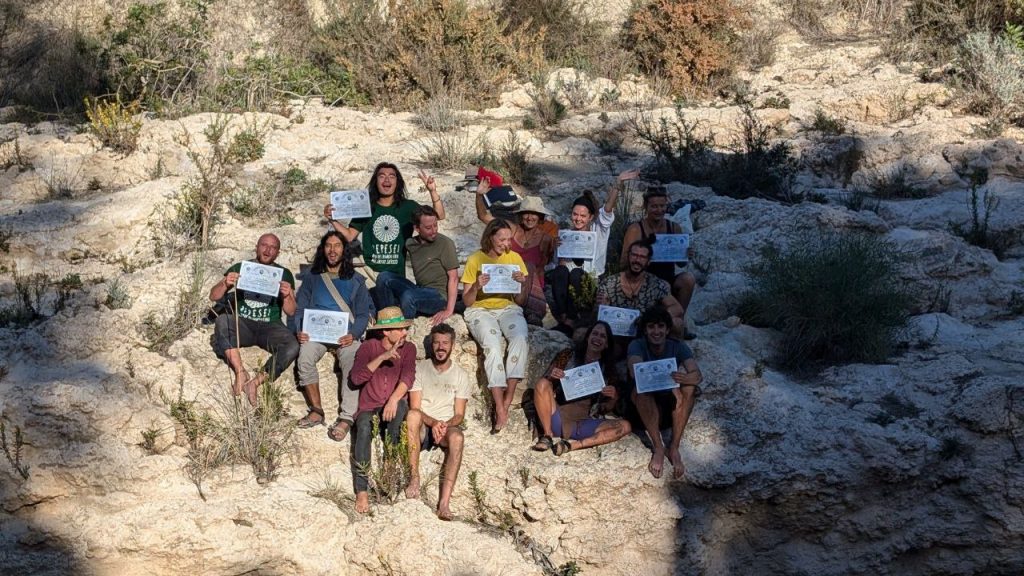
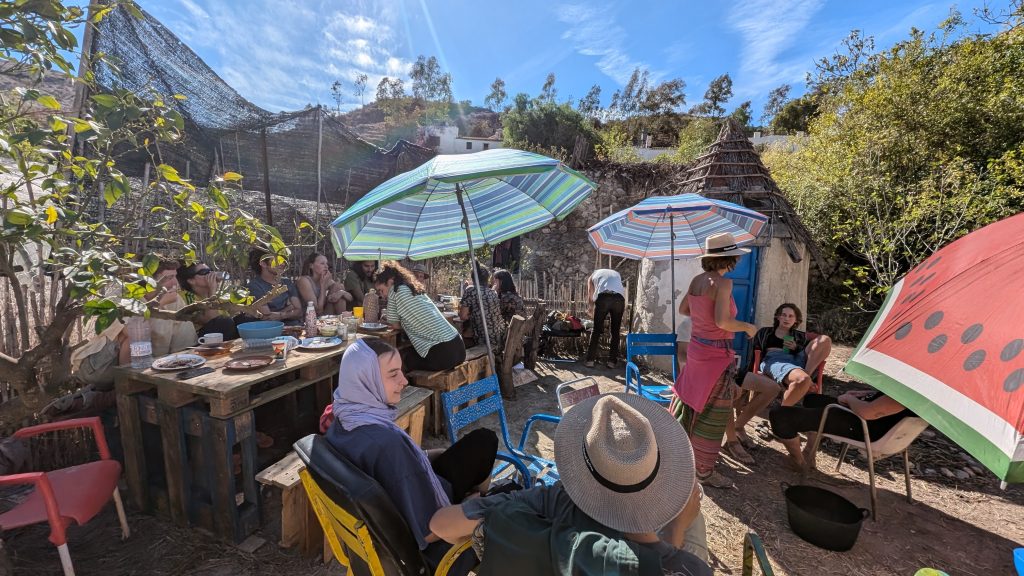
The course came to a close with presentations from all the students on their group designs, followed by a delicious meal with the Sunseed community in our chill out garden space, newly kitted out with creations from the PDC students, including newly made benches and tables from recycled materials, and a refurbished hut made of cob. After the final closing space and certification ceremony, the students said goodbye to their time here at Sunseed with a communal swim in the poza!


sunseed pdc 2024
It was a beautiful experience hosting this amazing group of permaculture students, and we look forward to hosting more courses here at Sunseed soon! 


0

Communication and Education

For the second year in a row Sunseed happily welcomed a group of 10 schoolchildren from Bulgaria to our community, along with two of their chaperones, for a shared weekend of learning about sustainability in our beautiful off-grid village. This four-day stay was made possible by the “Knowledge through Adventure” project of “Bulgarsko shkolo,” co-funded by the ERASMUS+ program.
This also marked another collaboration with our neighbours at Miraposa, with the children staying in the eco-guest house next door to Sunseed’s main house. A great arrangement considering we have 18 members of the Sunseed community at the moment and we are very full!

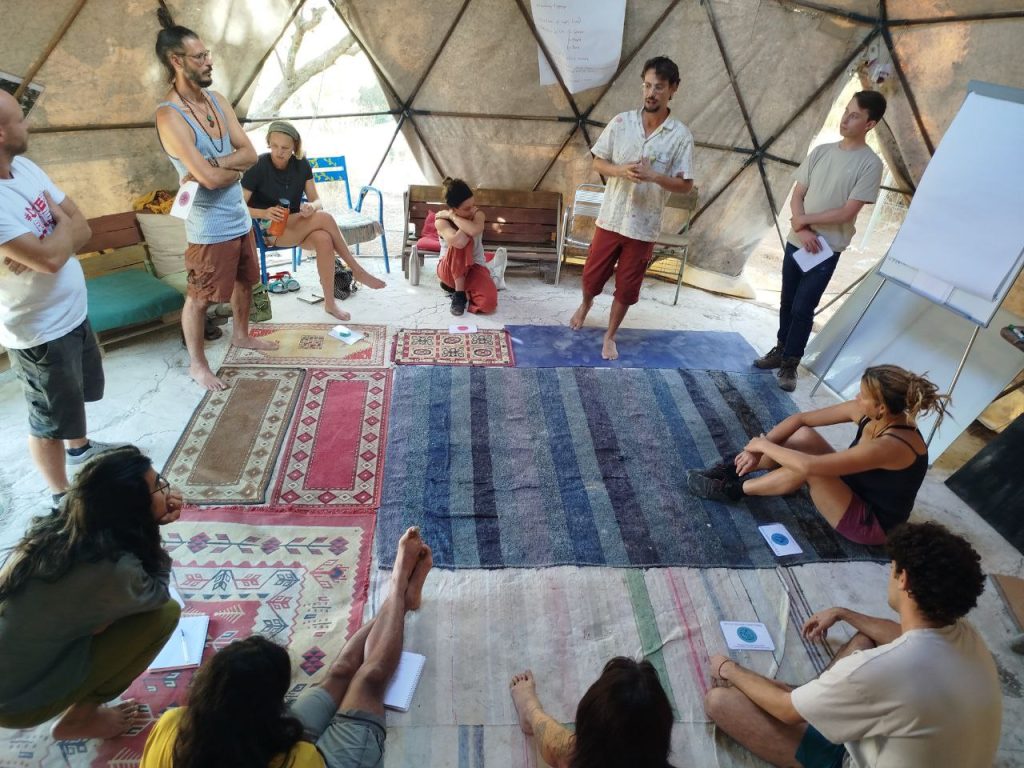
During the four day stay, the students had workshops on various topics connected to our life here in this desert oasis.


Since the group arrived in the afternoon of October 31st, they started with a workshop from Elisa and the sustainable living team centred around pumpkin carving and discussing all the uses of this seasonal vegetable that we have in abundance in this region! They talked about all the uses for the plant, including baking seeds and eating the delicious insides. After an afternoon of discussion and carving, the students (and the Sunseed community) enjoyed a delicious dinner of pumpkin soup. 

 The following morning they were given the full Sunseed tour by Ashley, our Education Coordinator, followed by a morning of planting new trees in the domo area with Juanma and the Organic Gardens Team. In the afternoon they ventured into the drylands with Ecostystem Restoration Interns Luna and Emilia to identify and categorise plants, finally making a nature mandala from found plant life in the area. 

 Saturday was another busy day for the students, with a trip to Sorbas to visit the geological phenomenon that is the Cuevas de Sorbas, followed by a traditional paella lunch and then a trip to the visitors centre in Sorbas, finally attending a workshop centred on carving using the miraculous pita plant at the Pita Escuela (formerly located in Los Molinos del Rio Aguas with us, but now headquartered in Sorbas).

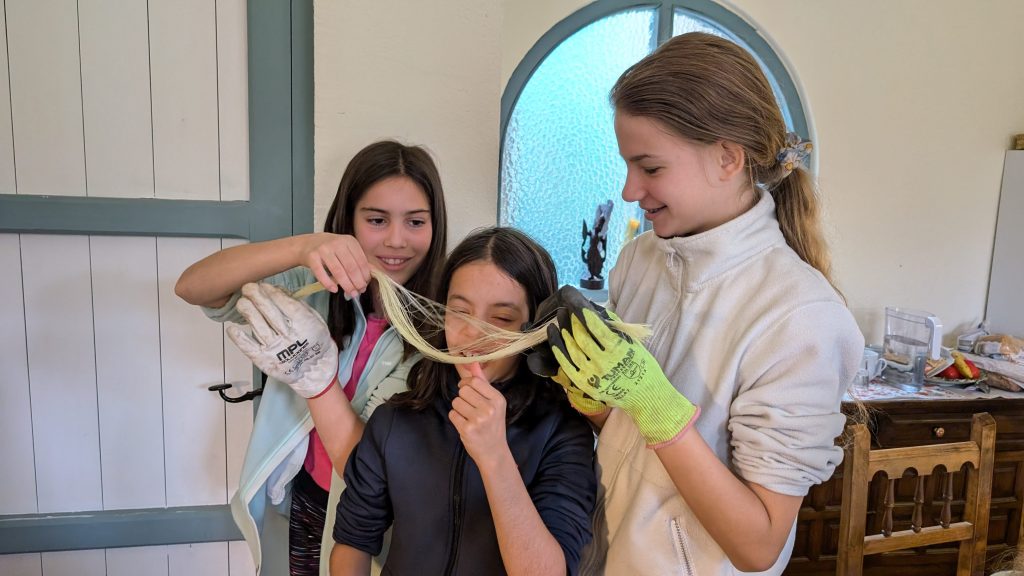
For their last full day with us (which was incredibly rainy thanks to heavy storms that flooded the area), the students learned about how to process the leaves of the pita plant to access the fibers, then learned how to braid them and make them into cordage, eventually turning them into their own bracelets, all courtesy of a workshop from Marco, another artisan neighbour in the village. Finally the children were taken through a gentle yoga and meditation practice in the afternoon with Luis, our Ecosystem Restoration Coordinator. 

 Hosting groups is a wonderful part of our life at Sunseed as a non-formal education project, and this return visit from our Bulgarian friends was no different. We hope to see a new group of them next year! There is something extra magical about being able to introduce our low-impact way of life to young people. 

If you are also interested in bringing a group of students of any age to Sunseed please get in touch with us at education@sunseed.org.uk.

0

Courses and Events
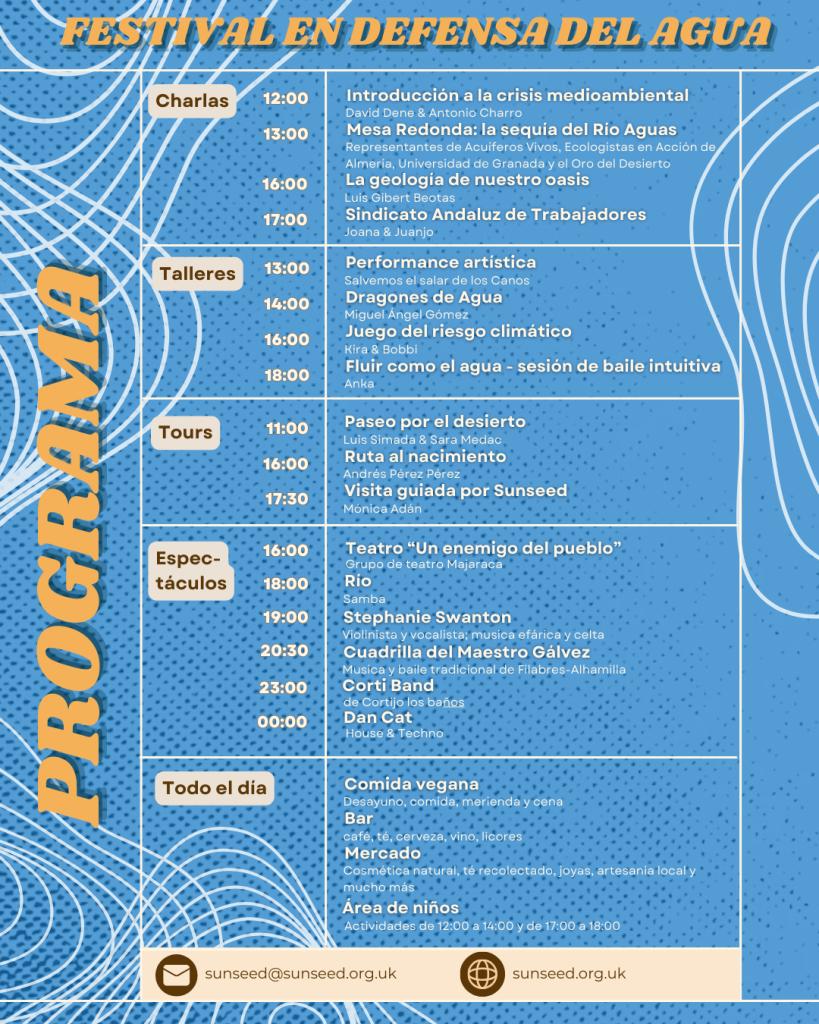
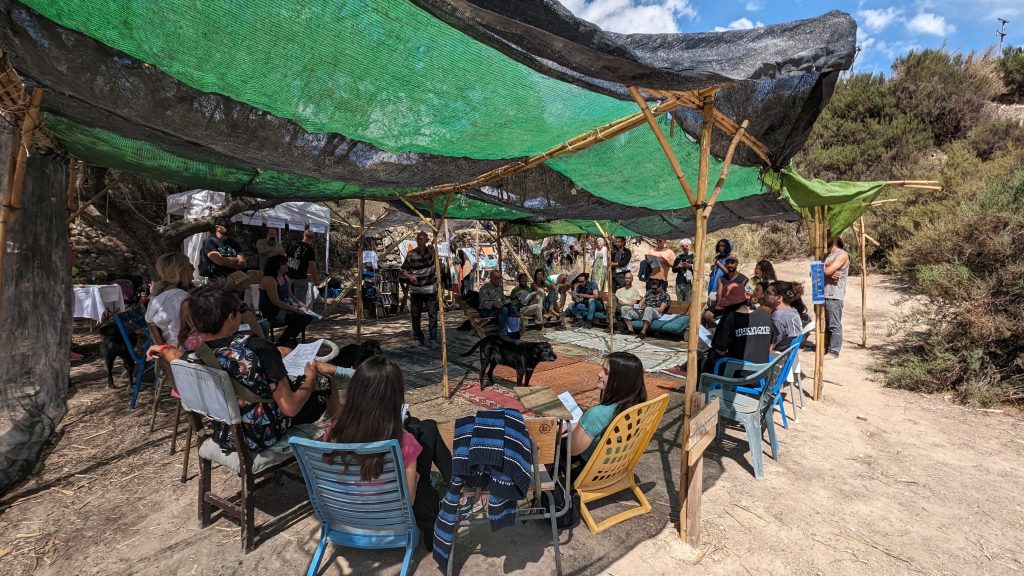
El pasado 27 de abril, celebramos en Los Molinos del Río Aguas la quinta edición del Festival en Defensa del Agua para poder dar a conocer y educar sobre la explotación del acuífero que alimenta el Río Aguas que mantiene con vida al pueblo de Los Molinos y toda la naturaleza alrededor. 


El proyecto Sunseed estuvo organizando el festival desde enero con la colaboración de todos los vecinos del pueblo y colaboración de otras organizaciones ambientales: Ecocidio del Río Aguas, Acuíferos Vivos, Ecologistas en Acción, el Sindicato Andaluz de Trabajadores y más. Poco a poco fuimos juntando un programa lleno de actividades educativas, artísticas y lúdicas. Y así nos fuimos preparando para el gran día. 

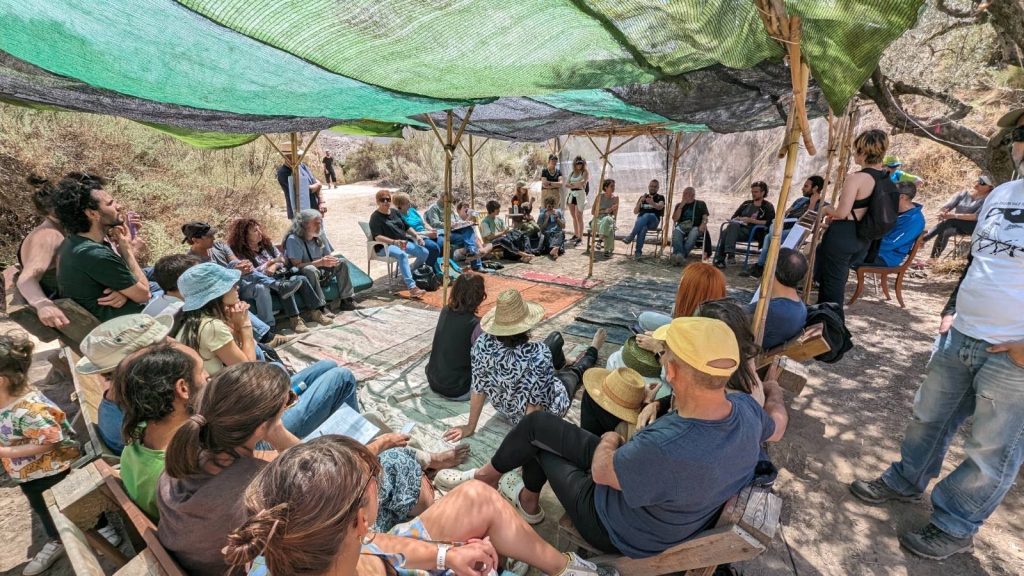
El 27 de abril comenzamos el día pronto con una charla que ofreció David Dene, de la organización Ecocidio del Río Aguas, explicando la situación que más amenaza a nuesto río, una nueva explotación olivera con un sondeo que saca agua del acuífero a escasos metros del Nacimiento. Durante la charla, David nos contó las acciones que están tomando desde su organización para evitar que nuestro ecosistema se seque por completo. 


Siguiendo a la explicación de David, tuvimos una mesa redonda con diferentes expertos. Manuel Pérez Sola, un referente ecologista en Almería y presidente de Acuíferos Vivos, Luis Villodres de la Universidad de Granada y Rafael Alonso, dueño de la olivarera orgánica en Tabernas Oro del Desierto. Tuvimos una conversación muy interesante en la que se presentó la situación actual con la explotación de los cultivos de olivo, el impacto en la región y las posibles formas de una mejor gestión del agua. Rafael nos presentó cómo en su finca se hace un buen uso del agua, consumiendo un 40% menos de agua que el resto de cultivos de alrededor y generando un aceite de muy buena calidad, haciendo ver que las alternativas son posibles. También se comentó el plan de acción de la CUMA (comunidad de usuarios de masas de agua subterranea del Río Aguas) para traer agua de la desaladora de Carboneras con diferentes opiniones sobre la posibilidad o cercanía de que este plan se lleve a cabo y el impacto que puede tener en la zona. En resumen, pudimos observar la necesidad de tomar acción pronto para salvar este ecosistema, ya son muchos años que no se presta la suficiente atención por parte de las autoridades a esta área y somos los habitantes y las personas que disfrutan del agua del acuífero que debemos preocuparnos y traer la atención para una mejor gestión del agua. 


Además de las charlas más educativas, también pudimos disfrutar de rutas guiadas por el ecosistema semiárido que nos rodea, un paseo al Nacimiento con Andrés Pérez y una visita guiada al proyecto Sunseed.


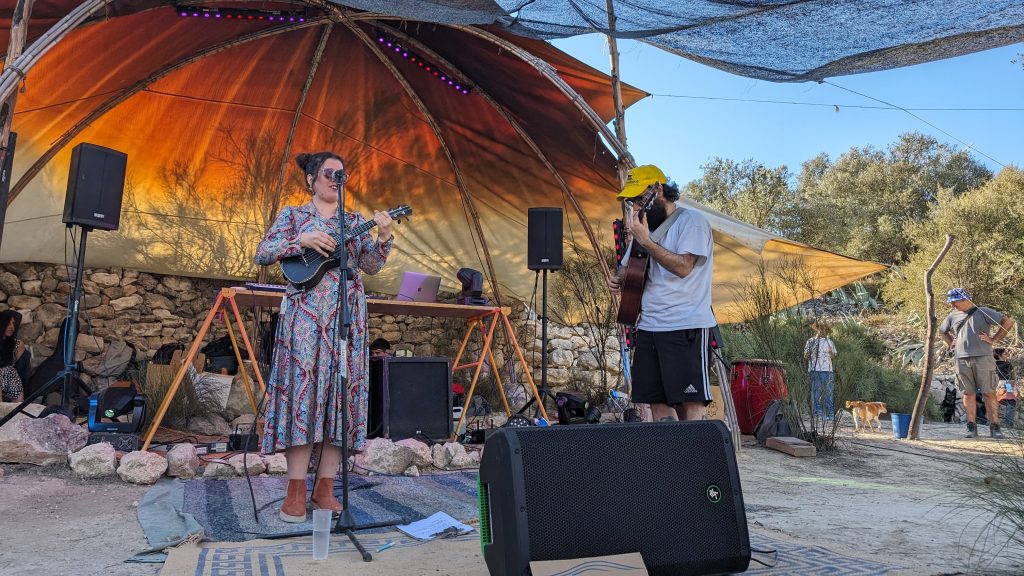
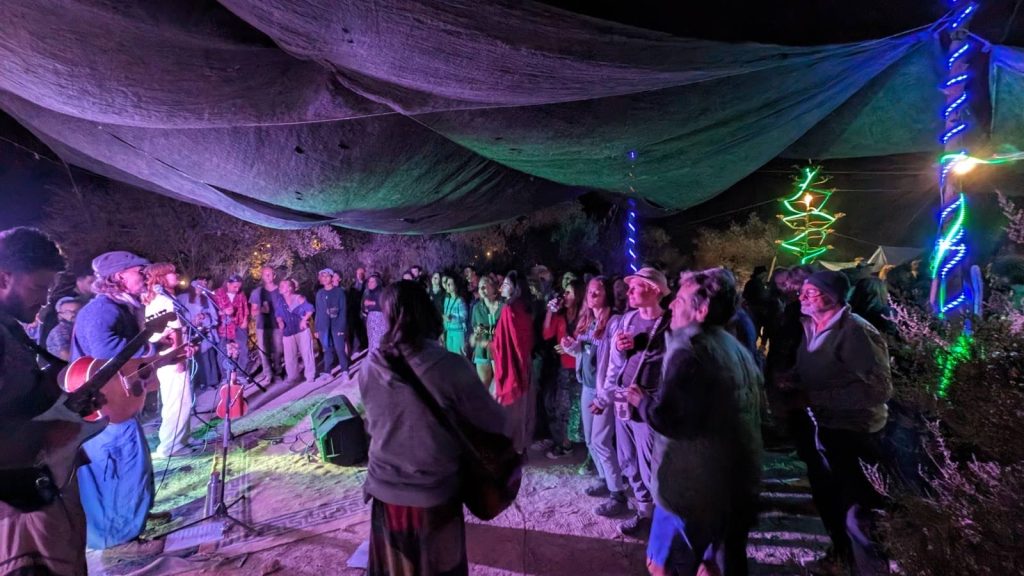
Las actividades artísticas tampoco faltaron, con una performance de nuestros amigos de Salvemos el Salar de los Canos, una obra de teatro del grupo de Teatro Majaraca y ¡mucha música! 


Todos pudimos disfrutar mucho de este gran día compartido con los vecinos de la zona y de Almería que dieron su atención y cariño a nuestro pueblo y su lucha por salvar el Río Aguas. Desde Sunseed estamos muy agradecidas a todo el apoyo, la colaboración y la ayuda que hemos recibido de las personas que nos rodean para poder llevar a cabo este Festival lleno de actividades y diversión. Esperamos poder seguir realizando diferentes acciones para salvar nuestro ecosistema y seguir disfrutando como lo hacemos por mucho tiempo más.

Os esperamos el año que viene, con suerte para celebrar las mejoras que han ocurrido hasta entonces
0

Courses and Events, Drylands Management, Organic Gardening

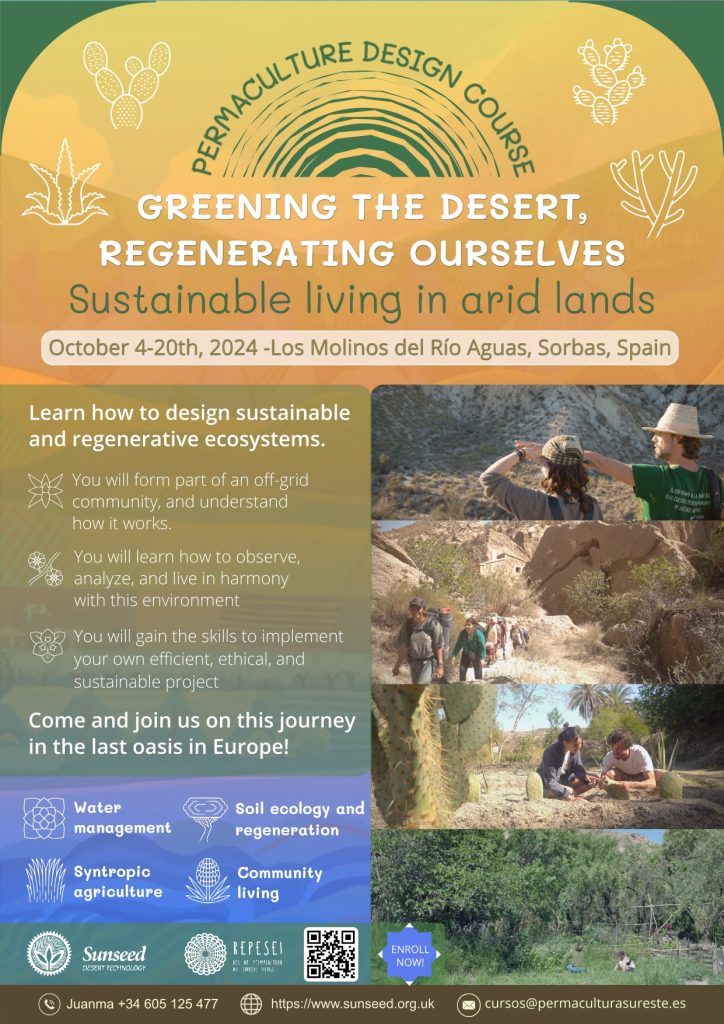
Greening the desert, regenerating ourselves

With Sunseed Desert Technology

Learn about Permaculture and how to design sustainable communities and regenerative ecosystems  in the desert!

Why

More and more people are starting to realize that living in a more sustainable way is the best next move they can make going forward. Permaculture is a way to obtain practical skills to achieve this goal, as well as teaching us how to communicate in a non-violent way. Some people have found that a Permaculture Design Course represents a pivotal moment in their life, and marks a transition towards a healthier relationship both with ourselves and everyone and everything that surrounds us. 

Where

Los Molinos del Río Aguas, Almería, Southern Spain  – an off-grid village, located in the “last oasis” of Southern Spain.   

When

October 4th – 20th, 2024

Language

English

Price

€580 until July (early bird discount) or €630 from July until end of September (includes 3 meals per day + supper on the arrival day and breakfast on departure day), as well as 90+ hours of permaculture classes (theory and practical). Classes will be given by several passionate permaculturists, 3 main facilitators plus invited experts, who will be sharing their years of experience obtained in different parts of the world. Participants also receive a certificate that they have completed a recognised PDC at the end of the course.

Book now

Register your interest by filling in the inscription form

Important note: Places can only be reserved once a EUR 200 non-refundable deposit has been made.


Course location

Ecovillage “Los Molinos del Río Aguas” Sorbas, Almería

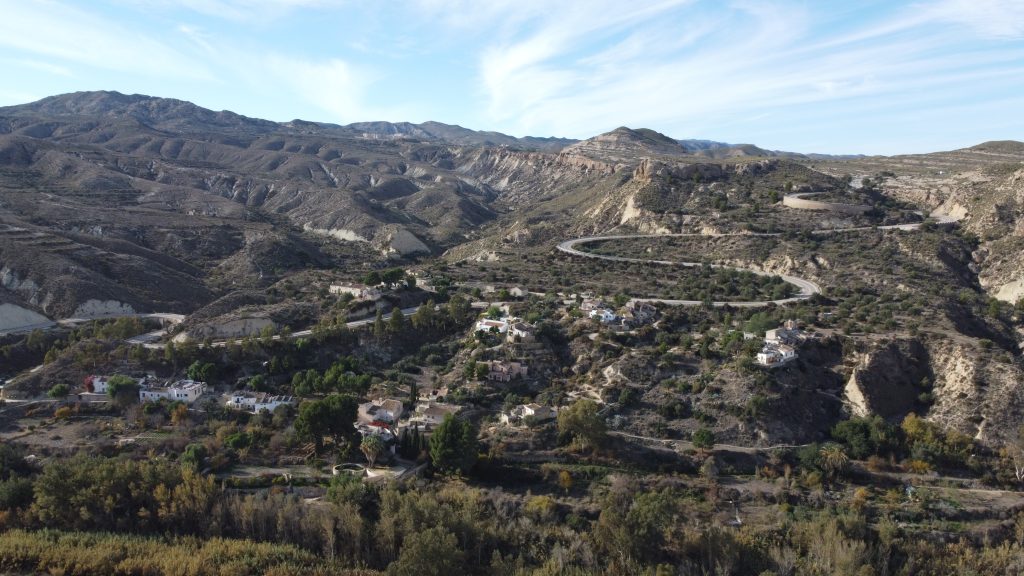
Los Molinos del Río Aguas is an ancient Andalusian village with a rich historical background tied to the abundance of water and the presence of numerous mills for producing flour and olive oil. Nestled in Europe’s “last oasis” and protected by the Natura 2000 network as well as being designated a natural park, the Los Molinos del Río Aguas valley forms part of a Karst landscape reserve, characterized by gypsum rocks. This unique ecosystem is home to various endemic species of flora and fauna.

All the houses in the village are self-sustaining: water is sourced from an ancient irrigation system and pumped into the houses using a hydraulic ram pump, while electricity is generated through solar panels. This setup offers a serene and responsible lifestyle independent of government utilities. Once nearly abandoned by the locals, the village is now home to a cosmopolitan group of approximately 30 residents, with a steady flow of volunteers and visitors enriching its vibrant community throughout the year. 

There are several hiking trails along the river, and natural swimming pools for bathing. The valley lies 30 km from the coastal natural reserve, Cabo de Gata, known for its stunning, pristine beaches. The nearest city, Almeria, is 60 km away.

Sunseed Desert Technology

Sunseed is a non-formal education project, housed in Los Molinos del Río Aguas. The project has over 35 years of experience researching, learning, and experimenting with the regeneration of ecosystems, including research into the symbiotic relationships between mycorrhizal fungi and plant roots – fundamental to soil restoration.

Over the years, Sunseed has gradually evolved into an experiential education centre with visitors and volunteers working to support the ongoing tasks of the project, whilst simultaneously learning how to live in a low-impact way. Sunseed grows much of its food in the community kitchen garden, and they are currently in the process of establishing a food forest.

Course Description 

Permaculture aims to create systems that create harmonious connections between humans and the planet. The Australians Bill Mollison and David Holmgren coined the term in the 70’s, a combination of the words “permanent” and “agriculture. Permaculture ethics, principles, and design techniques were first used to develop sustainable agricultural systems as an alternative to the growth of agro-industry and the consumer economy. From these beginnings, the concept of Permaculture has expanded and diversified to cover nearly all types of human-based systems.

Permaculture design courses (PDCs) have been developed as an introduction to this way of thinking and teach the tools and techniques needed for participants to design their sustainable systems. These courses are taught through both theory and practice and weave in both ancestral knowledge and recent discoveries.  At Sunseed we showcase many examples of Permaculture in practice.

In this two-week PDC, we use the basic curriculum as set out by the UK Permaculture Association and supported by the Southeastern Spanish Permaculture Network (REPESEI).

The course will take place in a real context, in which the participants have the opportunity to gain first-hand knowledge of how, at Los Molinos, we harvest water, regenerate soil, plant trees and grow vegetables in a desert environment following Permaculture principles. During the course, we will also address aspects of social Permaculture, where we will focus on self-care, community living, equitable participation, and effective decision-making models. 


Course content

We will follow the course curriculum as set out by the UK Permaculture Association and supported by the Southeastern Spanish Permaculture Network (REPESEI).

In addition to the theory, we will do many practical exercises in order to learn by doing, as well as a group final design. This will be done by participants using a Permaculture design framework, as well as all the theoretical knowledge gained during the course, and the knowledge and experience each person brings.  


Main subjects covered:

  1. A short history of Permaculture, ethics and principles (Mollison y Holmgren)
  2. The design process itself: survey – analysis – design – implementation – maintenance – evaluation – tweaking.
  3. Designing for climate emergency: food independence, communities
  4. Soil structure and the soil ecosystem: fertility, sampling and analysis, management, regeneration (especially in arid environments). 
  5. Water: the water cycle, water availability, capture and storage, retention in the landscape.
  6. Plants/trees:  basic botany, the ecology of a forest, forest management, types of forests.
  7. Sustainable farming systems, including regenerative agriculture, natural farming, and syntropic agriculture
  8. Wellbeing and self-care: symbiotic nutrition, integrative medicine
  9. Natural building 
  10. Appropriate technology
  11. Social Permaculture: social and organizational structures, group facilitation, participatory decision making, transition economics.

Practicals 

  1. Reading the landscape + observation techniques; forest bathing
  2. Basic mapping: aspect, scale, how to mark out contour lines, trilateralization
  3. Contour line measuring
  4. Water retention systems
  5. Soil analysis 
  6. Soil regeneration techniques
  7. Regenerative agriculture systems
  8. Natural building 
  9. Design time


Who we are


Frances Osborn (teacher)

Frances is an ecologist with a degree in Environmental Sciences from Southampton University, UK, and a PhD in Insect Ecology from the Simón Bolívar University, Venezuela. In 2014, after 10 years working as a research scientist at the Eastern University, Venezuela, she returned to Europe where she did her first PDC in Brighton, UK. She has been studying and practicing permaculture ever since, and graduated with a Diploma in Applied Permaculture in March 2021. She has been teaching PDCs since 2019 at different venues, including Proyecto Rucula in Murcia and the Suryalila Yoga Retreat in Cadiz.  Frances has extensive experience in garden and agricultural systems, gained from her many volunteering placements, including two years at the first Ecosystem Restoration Camp in the dry highlands to the northeast of the Murcia region in southern Spain. She is currently helping to restore an old stone cottage near Calasparra, Murcia  using natural building techniques. Frances is currently secretary for Urban Street Forest, an association based in Holland and Spain that seeks to reforest degraded drylands, and is an active member of the Permaculture Network in south-eastern Spain. Frances has made volunteering her main lifestyle choice, a path which has led her to minimize her costs rather than maximize her income, and gives her the freedom to take up opportunities as they appear. Travel plays an important role in her life and the bicycle is her preferred mode of transport, as this enables her to slow down, appreciate the scenery, and enjoy the journey. 

Luis Simada (teacher)

Luis is a permaculture advisor, designer and teacher and also network facilitator. He is trained as a designer, group facilitator, permaculture teacher, fermenter and project coordinator. He also participates and actively contributes in different social, activist and alternative movements like the Iberian Southeast Permaculture Network (REPESEI), La Espiral del Sureste Ibérico, the Iberia Ecovillage Network (RIE), and the Cauac Editorial Nativa or Social Permaculture Movements. He is coordinating the Ecosystem Restoration Department at Sunseed. He has also been teaching different courses about Symbiotic Nutrition, Regenerative and Natural Agriculture or Appropriate Technologies. Luis  really appreciates discovering new ways to create resilience and communities, that’s why he is also Simada, traveling around Iberia supporting and designing alternative projects while continue to learn from each one of them. He loves listening, expressing his emotions, creating new ferments and healthy recipes, doing experiments, designing social solutions, playing, wild nature, ancient trees, ancestral traditions and live music.

Juanma Pinar (teacher)

Juanma is an Andalusian biologist mostly focused on botany and agro-ecology (University of Seville, SP) with a Masters in winemaking & viti-vinicole environment (University of Bordeaux, FR). After a few years of working/traveling around the world in diverse kinds of vineyards and making different styles of wines, he started to worry about the big impact this huge industry has on the environment (such as waste of water, death of soils, harmful pesticides, elitist markets, and so on) so he came back home and deeply started to melt into permaculture philosophy. 

He obtained his PDC in early 2020 in “Centro Extremeño de Permacultura La Caraba” (Cáceres), and a following “introduction to bioconstruction” course in Alcañiz (Erasmus+, Teruel), plus a certificate of “nature activities instructor -educational and social potential-” from Andalucía GDR (Development Rural Group). Then he started to collaborate with a community garden integrated in a natural park in his town (Ecohuerto Los Toruños, Cadiz) and joined climate justice movements such as Extinction Rebellion and “Ecologistas en Acción”. In parallel he was working as environmental educator for different local enterprises (Ecoherencia, Caucenatura) mostly centered on agro-ecology, nature hiking and other active learning services for public schools. 

At the moment he is leading the gardens’ team in Sunseed, which includes work such as: fixing and redesigning the irrigation systems, restoring poor soils with -animal/green manure, compost and mulching- refreshing the old seedbank, replacing losts with new plants adapted to drought, researching on edible and medicinal wild-plants-based preparations, improving associations/rotations of crops, and a long etcetera of learn-by-doing processes.

Marco De Angelis (assistant teacher)

My journey began in Rome, where I was born 33 years ago with a deep love for nature. Growing up, I pursued my passion by studying Forestry Sciences and Nature Conservation, which took me on exchanges to Slovenia, Portugal, and Germany, broadening my understanding of sustainable resource management.

Completing my studies with a doctoral program in wood technologies and composite materials at the University of Hamburg, I discovered the potential of recycled materials for social housing, leading to collaborations with Ethiopia and South Africa.

Feeling a stronger connection to nature, I moved to Spain, settling in Los Molinos de Rio Aguas, an off-grid village. Here, I immersed myself in local projects and started cultivating food in our garden, finding fulfillment in sustainable living.

Now, I’m thrilled to share my journey and passion for permaculture in this course, eager to learn and collaborate for a more sustainable future.


Ricardo Riquelme (invited expert)

Ricardo is a permaculture designer, farmer specialized in successional agroforestry systems, efficient water management, biological pest control and zero tillage. Creator of the permaculture project  “Mano Verde”, based in El Bosque (Pilar de la Horadada, Alicante) where they cultivate and regenerate the environment based on syntrophic agriculture. Apart from offering seasonal products, they recover old seeds, offer consulting and design of farms and also training for farmers and individuals.

Mónica Adán

Mónica Adán is office coordinator at Sunseed Project, managing the administration, education and communication departments. She also collaborates in the Yes to Sustainability network where she is in charge of the administration and management of European youth projects and has gained experience in planning, writing, coordinating and executing grant projects. She has visited numerous ecovillages and ecoprojects all over Europe to learn more about the different living alternatives that can be created. She collaborates with projects that can help young people to discover their passions and empower them by developing their own projects.

Ashley Sheets

Ashley Sheets is a degrowth and environmental labour activist who works as project manager and sustainable living coordinator for Proyecto Sunseed, a non-formal education project. Her work is centred on environmental stewardship and social change, working to make more sustainable forms of living accessible and intersectional in the day to day. Her background is in degrowth, political ecology and environmental justice, and specifically focuses on the intersections where environmental movements and labour activism meet. She also collaborates with the International Degrowth Network, the Feminisms and Degrowth Alliance, and is a founding member of the Working Class Climate Alliance.

Our certifying Association

REPESEI, the Southeastern Spanish Permaculture Network.

Towards the end of the 1980s the seeds of the REPESEI (Red de Permacultura del Sureste Ibérico) were sown by a small group of locals and travelers. 

This small group organized gatherings, workshops and courses, during which ideas of alternative ways of understanding life began to germinate and grow, answering the questions and needs of the individuals and groups that attended them.

In 1996, Rosa Mejuto along with a women’s group, and inspired by Permaculture Movements and Natural Agriculture, founded the REPESEI.  The number of gatherings and Permaculture Projects increased, from which a network started to spread – and is still growing.

Since then there have been a large diversity of workshops and courses given and promoted by the network, among which we can highlight those by Jairo Restrepo (Columbia) and Nacho Simón (Mexico), that have taught us new ways to care for life in the soil under our feet, improving its fertility, and harmonizing the relationships between it and the plants we cultivate. Many of us now make our own bio-preparations. 

Furthermore, there have been many Permaculture gatherings held at many sites from Alicante to Málaga. Currently there are 4 gatherings yearly in Winter, Spring, Summer and Autumn, as well as a mutual support network (TAM – Tragozando Apoyo Mutuo) that support projects throughout south-eastern Spain. 

Dates

October 4th to 20th, 2024

You should arrive on Friday, October 4th in the afternoon / evening. Classes will start on Saturday, October 5th in the morning.

The course will end with the design presentations on Saturday, October 19th and an evening celebration. Participants should leave on Sunday, October 20th before 1:00 pm.  There will be one free day mid-course. Classes will start daily at 9:00 am after breakfast and end at 8:00 pm before supper. We always start the day with a morning circle to check in with each other, and inform about the day’s programme and any logistics

Pricing 

The cost for the PDC will be EUR 580 until July (early bird discount) or €630 from July until end of September + accommodation costs and includes:

  • Teaching (theory and practice)  by a diverse group of passionate permaculturists all of whom bring their own knowledge and experience in the different permaculture fields (or Permaculture Petals).
  • An officially recognised certificate at the end of the course. 
  • All meals and non-alcoholic beverages
  • We provide warm and cold showers and there is room to do collective laundry.
  • At Los Molinos there is lots of space to be on your own or to walk through the beautiful valley and ravine. 
  • Telephone coverage and Wifi 

Food and Beverages

All food and (non alcoholic) drinks will be provided during the whole course. We serve vegan/vegetarian food at Sunseed, but please talk to us about special wishes for food or allergies.

Coffee, herbal teas, and drinking water will be available throughout the course. You can also bring private snacks and treats for your well-being with you.

Accommodation (separate cost)

There is a choice of a mixed dorm (sleeps 6), triple, or double rooms (limited availability). All rooms with shared bathroom. There are also some spots available for tents. Please contact Juanma (contact details below) for details.

Booking and cancellations: Register your interest by filling in the inscription form here: https://docs.google.com/forms/d/1K_pmH3l6wRhchOWQ2TWxg6-RbAHTyk1LyH3RjdFQ_Eo/edit?ts=66262a1a

Important note: Places can only be reserved once a EUR 200 non-refundable deposit has been made.

What if my plans change: A full refund minus the deposit can be made up to one month (September 4th) before the start of the course. This will be reduced to a 50% refund (minus the deposit) two weeks (September 20th) before the start of the course, and a 25% refund (minus the deposit) two days (October 2nd) before the start of the course. This applies to the cost of the course only.

How to get here

Los Molinos del Río Aguas is a small village located in Sorbas, in the southeast of Spain, 45 minutes by car from Almería, the closest city.

Since Sorbas is a small town, we will organize a pick-up in order to let you all arrive safely at the placement. Therefore, the best connection will be to get to Almería bus station, and from there take the public transport to Sorbas. We will pick you up there and take you to Los Molinos.

If your idea is to fly to Spain, the nearest airport is Almería Airport (LEI). You can usually fly cheaper, though, if you go to Málaga Airport (AGP) or Alicante (ALC)


  • From Málaga Airport to Almería, take a bus to Almería. The journey takes approximately 3 hours and 30 minutes and costs 22 EURO (one way).: Check bus timetables AGP-Almería here!
  • From Almería Estación Autobús. There are several buses per day to Sorbas. The schedule varies depending on the day:
    • – Mondays to Fridays: 8:30, 11:00, and 15:30.
    • – Saturdays: 11:00.
    • – Sundays: 8:30 and 11:00.

  • From Alicante to Almería you can take a bus to Murcia which has daily direct connections, and from there take a transfer to Vera.  Then from Vera, there is the connection to Sorbas by bus. Check here the bus timetables Vera-Sorbas.

Make sure to check the bus timetables and availability in advance, especially for connections from Málaga and Alicante.

Please note that activities will start on Saturday, the 5th of October at 8:30 am, so please organize yourself in order to be able to arrive on Friday evening.  

Activities will end on the evening of Saturday, the 19th of October, so you can plan your trip back to your country starting from Sunday morning (20/10/2024).

Book now

Register your interest by filling in the inscription form 

Contact details

cursos@permaculturasureste.org

Juanma Pinar: +34 605 125 477

1

Communication and Education

By Bobbi, European Solidarity Corps member in the Drylands Department.

==

Last week, during our weekly “educational activity”, I invited the community to a presentation on the world of community conflicts. To kick things off, I asked my fellow Sunseeders what comes to mind for them when they hear the word “conflict”. Most of their responses were associations with anger, hiding, avoiding, violence. In other words, it’s not exactly something people feel like picking up in their free time. Quite the opposite, a deep fear of conflict is beneath the surface of many individuals of our community. And since community and individuals are inherently intertwined, this fear of conflict influences how we handle disagreements in community.


Because at the source of conflict is usually exactly that, a disagreement. And, according to Seeds for Change´s definition, conflict is what happens when two or more people have seemingly incompatible opinions, values or needs [1]. Given this, I argue that conflict is inevitable. So instead of tiptoeing around it, why not turn it into something we can welcome, something regenerative? How can we transform conflict from a destructive force into a catalyst for growth, both personally and as a community?


To tackle this puzzle, I would like to untangle conflict resilience, conflict resolution and accountability procedures.


First up, conflict resilience is about being pro-active, like weeding your beds so that your veg can grow big and strong. Just because conflict can be a gift, does not mean that conflict is something to seek out. Conflicts tend to grow when they are not dealt with when still small, with high emotional and sometimes even structural consequences for those involved. The art of a healthy conflict culture thus partially lies in prevention: formal and informal practices to address disagreements before they snowball into full-blown battles. Practices which can help us nip conflict in the bud include regularly sharing appreciation for each other, committing to handling frictions when still fresh and having an openness to giving and receiving constructive feedback. This way, differences in opinions, values or needs can be constructively worked through without tensions running high in the relationships. All this work contributes to our conflict resilience, our ability to handle conflicts on an individual and collective level without being thrown out of equilibrium.


But what about those conflicts that escalate nonetheless? That is where conflict resolution comes into play. This way, you do not need to scramble for solutions on the spot, but you can follow the predetermined steps of a conflict resolution procedure. Often when conflicts occur, thinking clearly and calmly is inhibited by difficult emotions taking the foreground, so coming to an agreement, or meeting in the middle, can seem impossible. Conflict resolution can be mediated or non-mediated. Importantly, it focuses on both parties hearing and being heard, underlying needs being put on the table and the relieving of emotional charges. Non-violent communication can be a valuable tool in these settings. These processes work best when people are committed to also doing their inner work; to understand why they might be triggered, what unmet needs they have, to take responsibility for their own emotions and be willing to receive the perspective of the other party.


And then there are times when harm or violence occurs, when trust is seriously shaken and a dialogue is no longer an appropriate response. That is where accountability procedures come in. Unlike the punitive legal system, this response is ideally in line with Transformative Justice principles. Priority lies both in care for the victim and providing learning opportunities for the perpetrator and the community. The accountability procedure seeks to find solutions which prevent recurrence of the harm taken place and usually entails various levels of intervention.


But how do we put all this theory into practice here at Sunseed? A place which welcomes a diversity of people with a high member turnover. Individual practices can be encouraged, but cannot and should not be enforced. Collective activities can be implemented and require a lot of trust. Furthermore, learning how to engage with conflict constructively is not something you learn overnight, but more like learning how to ride a bicycle. At first, it will feel awkward, you will probably fall a few times and scrape your knee. However, after a while, you might even be able to ride hands-free. And maybe, once you can ride hands-free, your (short) stay at Sunseed is already coming to an end again. 


Unfortunately I do not have a magic solution I can present to you about how to become the perfect we-love-to-manage-conflict-community. However, I do have a few ideas that I would like to explore and develop. And, because I believe Sunseed is not the only place struggling with building trust and continuity while continuously rotating its group members, I would like to share these ideas with the wider world of communities, collectives and movements as food for thought. 


Healthy conflict culture can be manifested both on an informal, (inter)personal level, as well as on a more structural level. On the informal level, community members can encourage each other and themselves to hold curiosity to experiences, to invest in relationships, and to embrace a culture of giving and receiving constructive and appreciative feedback. When individuals take responsibility for keeping healthy relationships and helping each other grow, a lot of powerful transformation can already occur.


This individual work ideally goes hand in hand with community practices. These practices can serve as learning spaces for becoming a better community member, as well as designated places for talking about tensions, to lower the threshold for sharing these tensions and invite everyone to participate in these processes. Weekly or monthly rounds of celebrating failings, addressing small tensions, or sharing appreciation are ideas that can be experimented with. Alternatively, you could facilitate spaces where people (one to one or in a small group) can more thoroughly explore feedback for each other, deepen their relationship or talk about community practices for collective growth. Lastly, drafting a collective agreement about conflict and feedback culture, as well as implementing a conflict resolution procedure can help with fostering collective commitment and function as tools for navigating conflict. After all, conflict is easy to talk about when it is far away, but gets a lot more tense once you are in the midst of one.


While I stand by these suggestions, there are a few unanswered questions to have awareness of. A main one for Sunseed is how this process of building trust and establishing conflict culture can take place while people are only staying for a short period of time. Another one is how we can also involve those who are conflict avoidant or perhaps do not see conflict engagement as a priority, though they might very well be actors in conflict.Lastly, how can we balance feedback and conflict engagement with having room to be, breathe, play and work? At what point is there too much conflict and feedback engagement? 


In the end, there is probably not a one size fits all solution for managing conflict in communities. The important starting point is a collective commitment to start unpacking this topic, with all its intricacies. Keeping an open mind and willingness to experiment is vital for this. At Sunseed, we are taking steps in this process now and will probably keep having to re-evaluate (and fail! and celebrate!), as we go on. 


[1] Working with Conflict in our Groups; a guide for grassroots activists – Seeds for Change 


Resource list 

  • Constellating Change training by the School of System Change 
  • Conflict is Inevitable event (Global Grassroots Support network, Alternative Justice, RadHR, Gastivists Collective)
  • Folks at Transformative Governance network 
  • Nonviolent Resistance in the Face of Hostility: Walking towards Conflict with Care for All – Miki Kashtan
  • DPACE Initiative – Foundations for Building Conflict Literacy 
  • Victorian Public Sector Commission – Building onflict resilient workspaces 
  • Loomio Cooperative Handbook 
  • DSFL – AWG Accountability Handbok 
  • Transition Network Conflict Resilience Resources 
  • Effective Collective – Dealing with Conflict
  • EAFB 2020 – Critic and Self Critic: What, Why and How.

Are you interested in joining our community? Do your internship at Sunseed, join us via European Solidarity Corps, check out our vacancies, or come as a volunteer.
0

Volunteer Stories

Last week the communications department offered a creative writing event in the drylands. Volunteers were invited into a meditative space to listen to Nature. They were encouraged to write about what has inspired them most from being at Sunseed and what they feel most passionate about contributing to life. Below is one of the pieces of writing which emerged. There is also a poem created by chatGPT, based on this writing, which a fellow volunteer generated, out of curiosity.


A walk in Sunseed

I took off my shoes. I like walking and I like being barefoot too. Feeling the earth underneath. Feeling connected. I follow Tabitha. She guides Naomi and me through the garden. Eddies Vedders song from “Into the wild” in my head. The warm spanish February morning sun is warming my body and face. I sometimes forget that it is winter. Spiky plants and dry straw hurt my feet, but I keep walking. The plants in this climate are in defense mode with their spikes. I have a weird feeling in my stomach, telling me something is a bit wrong, but I keep walking!

The birds are singing wonderful songs for us. The white butterflies are flying around the cabbage in the beds. Wasps are already awake in February here and the cats and dogs walk around. There is so much life in this place! My arrival three weeks ago seems so long ago. In the beginning of my stay, I felt that this is not my natural habitat. I thought about walking through German forests seeing green fields. I thought everything seems to be dead or dying here. Now I feel very different about this area. I feel more home here and it feels good to be here. I thought about living a nomadic life. Always traveling to different places. Always something new and uncertain. But I started liking the idea of a life like a migrating bird. Having different homes. Knowing already what’s waiting for me north or south.

I feel the wet soil under my feet in the garden. It is wet because it gets flooded by the garden team for watering in the traditional way. I see the Eco-maintenance team plastering the walls with clay. I hear the neighbors’ loud techno music and transporting stones with a big machine. I go up to the parking lot feeling the concrete cold and refreshing under my feet entering another world. I see cars going to Sorbas on the road.

I go to the compost toilet now. I feel leaves under my feet, like home. I close the curtains, take off my pants, squat and let go! I feel the wind. I put leafs and ashes, close the hole, put on my pants and wash my hands with water and soap. The sustainable living team makes the soap and someone a long time ago put the pipes that bring the water here. I don’t know if it is rainwater or if it comes from the ramp-pump and the lake.

I go to the lake now. I dip my feet into the clear and cool water. I can see all the algae-covered ground. I realize that I feel happy. The weird pain in my stomach is gone.

I walk along the seedlings and seed trays for regenerating the dessert. I pass the beautifully flowering almond trees. It is a miracle how plants grow. In the beginning they are little seeds and they become big trees or amazing vegetables of which we cook our tasty lunch and dinner. It fills me with joy to cut all these fresh ingredients to cook. (But sometimes it is still nice to take my car, go to Sorbas and have tapas and beer or buy chocolate, cheese and chips and see other people walking around, who I don’t know.)

I feel so much gratitude! Gratitude for everyone in our little tribe of 25 people, doing their tasks and providing for everyone else, keeping our lives filled with everything we need. I feel gratitude for the food, the water, the sun and the PV panels and the batteries, the soap, the fire in the room, when it was colder a few weeks ago. I am thankful for the joy and fun, the guitar playing, singing and the games in the evening. The hugs and the smiles, check-ins and sharings. And every evening the beautiful stars in the night sky. I feel gratitude for mother earth providing for us. And I trust in her! I am not afraid of collapse or climate change because mother earth is there for us!

The plants here seem to not need much. It never rains but the dew in the night is enough for them to survive and thrive. I don’t need much either. So many things are broken or old here, but that’s OK. I just need a place to shit, toilet paper, food from plants, filtered drinking water, gas for cooking, a pond to swim in and a dry shelter to sleep in with a warm blanket. I need good people around, to talk, play games, make music and hug. Life can be very basic and still be fun!
By Tobias Dienesch.


AI “poem”

cleardot.gifBarefoot strides, beneath the skies, I roam,

In Sunseed’s embrace, I’ve found my spiritual home.

With every step, the earth whispers, “You’re not alone,”

Guided by Tabitha, through the garden, we’re shown.

Eddie Vedder’s tunes, a wild soul’s delight,

Warm Spanish sun, in winter’s light, ignites.

Thorns and straw, a tender touch, despite,

In nature’s embrace, my senses ignite.

Birds serenade, in this dance of life,

Butterflies in white, in love’s flight, rife.

Wasps and beasts, in February’s sun, thrive,

A testament to life’s fervent strive.

From foreign lands to this arid embrace,

Once alien, now my heart’s resting place.

Nomadic dreams, with a migrating grace,

In Sunseed’s arms, I’ve found my pace.

The soil moist, underfoot, a sensual call,

Clay walls, techno beats, life’s enthrall.

Compost rituals, in nature’s stall,

Letting go, in the wind, I surrender all.

Lake’s cool kiss, algae’s embrace,

Pain dissolves, in this serene space.

Seedlings and almond blooms, nature’s lace,

In earth’s bounty, our sustenance we trace.

Gratitude flows, for the tribe, the land,

For every meal, every helping hand.

In simple joys, together we stand,

Under stars, in this sacred band.

Needs are few, in this life, so grand,

With earth, with each other, we understand.

In Sunseed’s embrace, together we band,

A testament to life, beautifully planned.

In rhyme and rhythm, a spiritual ode,

A journey of connection, in love’s abode.

In Sunseed’s embrace, our hearts explode,

A dance of life, in love’s code.


0

Communication and Education, Courses and Events


This year, the Sunseed Community, nestled in the beautiful landscape of Los Molinos del Río Aguas in Almería, was privileged to advance our environmental and educational initiatives, thanks to the support from the EUTeens4Green Program. Our commitment to fostering sustainable living and environmental awareness was enriched through a series of thoughtfully planned activities.

The funding from EUTeens4Green was instrumental in enhancing our core projects, particularly two main events that drew significant attention and participation from the community and beyond. The first, an Art Residency named Germinar-t, brought together performers from across Europe to explore and express the environmental challenges specific to our region. This residency led into the second major event, the Festival del Agua, which has been a cornerstone in our efforts to advocate for water conservation and bring to light the pressing issue of the Ecocide of the Río Aguas. These events were not only about raising awareness but also about bringing people together to share in the experience of community, education, and activism.

In addition to these key projects, we also hosted a one-day visit from students of Almería University. This activity was an integral part of our journey with EUTeens4Green. It offered students a hands-on experience of sustainable living practices and sparked discussions on environmental preservation. This visit underscored the importance of connecting educational institutions with real-world environmental initiatives.

We extend our gratitude to the EUTeens4Green Program for their vital support over the past year. Their contribution has not only facilitated our larger events but has also underscored the value of each step we take towards our mission. The partnership with EUTeens4Green has been a key factor in our achievements, allowing us to reach wider audiences and deepen our community’s engagement with environmental issues.

As we celebrate this journey, we acknowledge the role of every project, big and small, in our ongoing efforts to promote a more sustainable and aware society. We look forward to continuing this work, inspired by the progress we’ve made and the support we’ve received. Here’s to a future where our community and our planet thrive together.


0

Communication and Education
As a community, we wanted to learn more about the local environmental and labour justice struggle surrounding el mar de plástico (the sea of plastic), referring to the agricultural system in/around Almería which results in a literal sea of greenhouses as far as the eye can see. 

This educational activity consisted of two parts:

Within the first week, we were informing ourselves about the sea of plastic – a local justice struggle on a human and environmental level in the region Almería  where Sunseed is based. The greenhouses in Almería, referred to as el mar de plástico (the sea of plastic), supply between 40-50% of all fruits and vegetables within the EU which equals 3.5 million tonnes of food annually. This comes with several environmental and human rights issues, such as plastic pollution, groundwater depletion, groundwater and soil pollution due to chemical fertilisers and pesticides, and the exploitation of (undocumented) migrant workers due to bad working conditions and low payment, qualifying as a slave labour conditions.

The week after, we went to El Ejido to talk to a representative from the Andalusian Workers Syndicate (SAT) who is supporting migrants in their struggle for humane working conditions. The objective of the syndicate is to stop exploitation of one human by another by trying to at least enforce the workers’ rights that are already there (but unfortunately don’t go far enough). Most greenhouses are close to the Almerían municipality of El Ejido.

Part 1: Info session within Sunseed

To gain a common level of understanding regarding the topic, we watched the following mini documentaries:
> Inside Europe’s BLACK HOLE: Almería  ‘s Sea of Plastic – YouTube
> 🍅 Veggiespiracy 🥦 Plastic Sea Almería   | 40.000 hectares of greenhouses | Louis De Jaeger – YouTube


After that we shared reflections about this topic in smaller groups and brainstormed questions we wanted to ask our contact the following week when going to El Ejido. We came up with questions regarding the following topics:

  • the worker’s situation in the greenhouses;
  • the production system and ownership of the greenhouses;
  • the legal situation surrounding this form of human and environmental exploitation;
  • resistance towards this exploitation;
  • water scarcity due to the industrialised food production in the greenhouses;
  • the role of the Andalusian Workers Syndicate (SAT);
  • the meaning of the greenhouses for Spain;
  • and finally the potential future of the greenhouses.
  •  

Part 2: Visiting SAT in El Ejido

Introduction of our SAT contact person
I am a rural (campesino) worker doing a regular job and besides that I also work for this syndicate outside of my working hours. I go as a representative for Almería   to different meetings for immigrant workers, telling what happens in Almería   to the outside world.

I am also part of another group called “Campesino”, that is a collective group of different syndicates that have a lot of meetings and often go to Brussels.  


What do you do within the syndicate?

Generally speaking, confront capitalism. We organise demonstrations and strikes. We try to help workers with their rights. I also work as Treasurer here.


How can you as a person and SAT in general help greenhouse workers?

We listen to the workers’ needs and problems and try to figure out how we can push the needs as a group. We try to find ways to pressure companies and the capitalistic system as a whole.


Generally speaking, what are the needs of the greenhouse workers?

The employers are often not following the law and pay less money than they should. They often do not pay enough, for extra hours and they do not give holidays. There is also sexual harassment happening, mostly towards women. Other problems are that many do not speak Spanish so we also offer Spanish lessons here. 


Have you been taking greenhouse companies to court?

Yes a lot! Thanks to our fight, companies now have to pay extra hours and vacations. There is now more control from the government and inspections are conducted.


What is an example of success that SAT had?

There are a lot of cases where SAT helped workers to receive their payments when employers refused to pay. For instance, there is the case of this worker who only earned 20 euros per day while working 14 hours per day from Monday to Sunday. He heard about the syndicate from a Moroccan friend and then SAT took this case to court and he was awarded 20.000 euros and he’s now in the process of getting that. So that is a success. But it’s also a success that many of the businesses here know about SAT. SAT has the recognition of fighting for the workers and that’s really important. It means the employers know that they can’t just do whatever they want, because they are being watched. Another fight I consider a success was attending a strike that was not organised by SAT but by other bigger syndicates (https://www.eldiario.es/andalucia/Almería  /envasadoras-manipulado-Almería  -conciliacion-huelga_1_6375400.html). SAT is quite small but when it came to the moment of getting to the streets, SAT was the first to show up there. 


How does SAT get funding?

Monetary aid mostly comes from Brussels, from the left wing parties and organisations. Also the yearly fee we get from workers covers some costs. SAT is one of the smallest syndicates in the area, getting funded by different programs but we still don’t have enough people to do all the work that would need to be done. Applying for more funding, e.g. from the EU, requires a lot of work, as granting institutions demand detailed documentation of SATs work. So this is difficult to achieve when already being understaffed.


Do you have to register as a member to get help from SAT? 

No, we try to help everyone and to listen to their needs. To get legal help though, you have to register so you can get a lawyer from us. 


How do you register as a SAT member?

You can only give your name. You can but do not have to show your passport or legal papers. And then you have to pay the yearly fee of 65 euros – it is the cheapest syndicate I know of.


How many members are registered?

It is hard to say as there are a lot of transient people from Africa that come and go. Many registered but then later we never heard from them again. But I would say about 4.000 people that are registered. Fixed members (affiliates) though I would say over 600 people.


How many greenhouse workers are there in this region at the moment?

It is hard to say as many are not registered, they have no papers and are “illegal” immigrants. Most of them also do not know about their rights. But roughly speaking about 300,000 workers in the province of Almería  . 


What are the demographics of the greenhouse workers?

The workers are mostly men. They’re trying to make a better life for their families who are back home. They’re mainly from Algeria and Morocco. More are beginning to come from Sub-saharan countries now. 


How can the undocumented/”illegal” workers get their needs met/get help?

We give counselling to them and try to legalise their status with an “Arriago” working visa. We try to get them legal papers that show that they live and work permanently in Spain.  After being in Spain for 2-3 years you can apply for a working and resident permit. It is not easy though to get this permit, a series of requirements have to be met. 


Do you have examples of companies using “illegal” workers?

On paper all looks good, but reality tells a different story, many are “illegal”. When we win a trial against companies, they have to admit they have used “illegal” workers. Most of the companies have got used to thinking that they can get away with this as there are so many “illegal” immigrants coming through all the time and it is easy to take advantage of them. 


What is at the root of the exploitation of workers?

The exploitation of workers in this sector is caused by big supermarket chains who put a lot of pressure on the farmers. They just don’t buy the tomatoes for the price the farmers would decide on. And following that a lot of price dumping is happening. The Situation in El Ejido is a structural issue, which needs to be solved somewhere else. El Ejido is just one example of what is created by capitalism. If the workers would get paid more fairly, and if the farmers would invest more in better work and food conditions in general, the prices of the exported products would increase. That would have a direct effect on the prices we pay in the supermarkets. And this could trigger an enormous inflation…


How do greenhouse workers find out about SAT?

Mostly they hear about us through other workers, through word of mouth. We also get recognition with our demonstrations, strikes and movement rallies. Some may also see, hear or read about our victories in trials we won against companies. Some may hear about us in the media and news. 

SAT is also active in St. Isidro, a region in the north of El Ejido characterised by its greenhouses. Here the structure of workers’ rights is better organised. Just the fact that the workers know more about the existence of SAT makes it easier to help and to be active. Also, workers bring a more politically-driven energy and attitude to the table which also makes it easier to get together and achieve progress.


Are the greenhouse inspections you mentioned only for companies that employ workers affiliated with SAT?

No, there are regular inspections of fieldworkers and also other parts of the company, to see if the requirements are met. This is not linked to SAT membership.


Is it the EU or the Spanish government doing the inspections?
The EU itself doesn’t really help, it is the Spanish government. It’s more on a country to country basis. 


Who owns the greenhouses?
They began as small single owner businesses and cooperatives, then big companies got interested. It was better organised before. Bayer, Syngenta and Monsanto control the seeds used now, so it’s Genetically Modified Organisms (GMO). Also foreign companies from the Netherlands, Germany and France are buying land to cultivate now. These big companies also denounce and serve lawsuits to smaller companies if they use non-GMO seeds. They control the laws and own the market. They can make laws which suit them and convince smaller growers they’ll get a better yield with GMOs. The suppliers have a series of requirements they have to meet to sell to supermarkets. They tell them what to do if there’s a plague or the plants get ill. You have to buy their products so you enter into their game and so they make you consume their products for life. If you don’t play their game, you don’t play! 


Is there anyone or any organisation here in the area interested in fighting against GMO? And are they getting any closer at getting their interest met?

There are some groups in Spain like Greenpeace, there might be more. The fact is that as a producer, as a farmer, you need a plague resistant plant in order to make money. Otherwise, your whole crops will die and you’ll get no benefit from that, you’ll lose money. Companies like Bayer, Syngenta and Monsanto are tweaking and engineering this in order to make resistant plants and most of the time you will choose that because it’s a guarantee that you’re not going to lose money. To try to do the old fashioned organic way is just too risky for a farmer betting all his livelihood on getting a good crop. Also not everyone can “afford” to buy ecologically and as farmers have been using pesticides for years, it takes a big cultural shift to change this. The EU demands a certain quality of products but sometimes produce from Morocco slips in which has more chemicals in it and is cheaper. 


Do you think that Spain will eventually get laws that prohibit farmers from using their own seeds so that they will only be able to get seeds from private companies?

What is happening here in Almería  , Andalucia and Spain in general, is the fault of the pressure that is coming from the top of big supermarket chains that are pressing down from the top, demanding cheap food. There are farmers in small villages somewhere in Spain who do have their own seeds and crops, but the problem is that they’re not able to sell to the mass market like supermarket chains. All these stores that are selling according to EU regulations need traceability to the source, so the only way these farmers can sell their stuff is by local farmers markets which are very small scale. Or they already sell to specific restaurants in the area.

What happens with products from the greenhouses that cannot be sold?

The huerta de europa products sometimes get thrown away if they aren’t “perfect”. Sometimes the non-perfect products get pickled. Islamic and feminist groups also help the workers and especially the Islamic groups appeal to the Moroccan workers. SAT’s focus of supporting workers who have already been in Spain for quite some time to get them a permit to “legally” stay, is quite pioneering. The company I work for next to SAT is also taking part in an experiment that allows workers to take produce home if it’s surplus or not fit for sale. 


Who are the foremans in the greenhouses?

The foremans are usually Spanish, occasionally Romanian and they are very difficult to deal with. They abuse their power and lie. They are chivatos and negreros, the right hand men of the company owners and they think they’re above the law. They’re sometimes even worse than their own bosses/greenhouse owners.They are usually the main enemy because they are the ones who are stalling the fights. They are usually the ones who know things first because they’re the ones on the ground. The boss might go around every 3 or 4 hours, but the foremans are the ones working in the fields and sometimes they lie, and I have seen very unfair things happen because they’re friends with the bosses and the bosses will believe them without any proof. They’re traitors. 


How can Sunseed support the syndicate?

It’s basically about being more people for collective actions. When there are events we organise, then it’s good to have more people showing up with banners and making noise. That might do more damage to the business than a single legal action that the greenhouse owners can more easily hide. And if people on the streets can see this collective action then it has a lot of impact but also the fighting is nice. For people who are young, getting involved in these types of actions is very gratifying. Once I was hit by someone at a protest because I was protesting against the exploitation of this worker we already talked about (who was working from Monday to Sunday every week 14 hours per day while earning 20 euros per day). I’m not scared of going to actions like this and I can only laugh at the employer who is doing these horrible things to this worker and trying to scare me off with this act of violence. It’s important to get involved in these actions that have such practical outcomes. Since there are also illegal practices going on close to Sunseed, e.g. illegal wells for olive plantations. Sunseed could also take actions like this and the syndicate will be there to support these actions. 


What is the status quo of environmental movements in Spain/this area?

Movements of fighting for anything in general came way later to Spain than in other countries in Europe like France. And activism is arriving in Spain slowly, but not necessarily in a place like El Ejido, a little town, which is full of racism and sexism and generally also more reactionary. 


What’s the average age of people showing up to actions or demonstrations also regarding climate change?

I am the youngest worker in the syndicate. What could be the reason for that is that young people are less engaged in this topic. Maybe because on the left, there are also some horrible people who don’t change anything for the better and that we might need new associations to get real change. Generally, it seems like the majority of the people here in Almería   are not aware of the climate crises and rather want to make a lot of money. 

0