Your address will show here +12 34 56 78
Eco Construction, Volunteer Stories
DSC00301 Normal 0 false false false EL X-NONE X-NONE /* Style Definitions */ table.MsoNormalTable {mso-style-name:”Κανονικός πίνακας”; mso-tstyle-rowband-size:0; mso-tstyle-colband-size:0; mso-style-noshow:yes; mso-style-priority:99; mso-style-qformat:yes; mso-style-parent:””; mso-padding-alt:0cm 5.4pt 0cm 5.4pt; mso-para-margin-top:0cm; mso-para-margin-right:0cm; mso-para-margin-bottom:10.0pt; mso-para-margin-left:0cm; line-height:115%; mso-pagination:widow-orphan; font-size:11.0pt; font-family:”Calibri”,”sans-serif”; mso-ascii-font-family:Calibri; mso-ascii-theme-font:minor-latin; mso-fareast-font-family:”Times New Roman”; mso-fareast-theme-font:minor-fareast; mso-hansi-font-family:Calibri; mso-hansi-theme-font:minor-latin;}

Hello, I’ve been a volunteer in Sunseed for the last 4 months but only last week I decided to join the ecoconstruction department. I always had in my mind the image of the ecoconstruction site as a place full of men doing heavy physical labour and was unsure whether I’d be able to keep up. But I discovered, it is so not the case… Today, after clearing out some areas by removing away stuff (which warmed me up and gave me a good wake up), we continued with rendering. Rendering is putting a semi-liquid white mixture on rough walls to give them that smooth feeling and typical look of the houses in the area. The materials we use differ depending on whether it’s the outside or the inside surface of a wall. For the inside surface, we mix water with gypsum, a material with properties that regulate the humidity coming from the outside climate.

DSC00332 Normal 0 false false false EL X-NONE X-NONE

/* Style Definitions */ table.MsoNormalTable {mso-style-name:”Κανονικός πίνακας”; mso-tstyle-rowband-size:0; mso-tstyle-colband-size:0; mso-style-noshow:yes; mso-style-priority:99; mso-style-qformat:yes; mso-style-parent:””; mso-padding-alt:0cm 5.4pt 0cm 5.4pt; mso-para-margin-top:0cm; mso-para-margin-right:0cm; mso-para-margin-bottom:10.0pt; mso-para-margin-left:0cm; line-height:115%; mso-pagination:widow-orphan; font-size:11.0pt; font-family:”Calibri”,”sans-serif”; mso-ascii-font-family:Calibri; mso-ascii-theme-font:minor-latin; mso-fareast-font-family:”Times New Roman”; mso-fareast-theme-font:minor-fareast; mso-hansi-font-family:Calibri; mso-hansi-theme-font:minor-latin;}

In our case, the surface was on the outside. So we used a mixture of marble, lime and water. This is absorbent, which makes it ideal for avoiding ersosion from the rain. The area in which we were working was the roof of the kitchen in Isabella’s. On a sunny day like this, there couldn’t be a better working spot. The only downside to that was that to get up there, we needed to climb up a ladder, which with the weight of the materials and my fear of heights, wasn’t an easy task at first. But after getting the hang of it, I can now proudly add it to my list of newly  learned skills. In addition, the view of the valley from up there was amazing. And at some point, while waiting for Mirko (he’s the ecoconstruction assistant) to clean the tools we were going to use, I got absorbed to the sounds he was making and along with focusing on the singing of the birds, the neighbours’ working and the occasional trucks passing by the near road, I dived into a short meditation.

DSC00315 Normal 0 false false false EL X-NONE X-NONE

/* Style Definitions */ table.MsoNormalTable {mso-style-name:”Κανονικός πίνακας”; mso-tstyle-rowband-size:0; mso-tstyle-colband-size:0; mso-style-noshow:yes; mso-style-priority:99; mso-style-qformat:yes; mso-style-parent:””; mso-padding-alt:0cm 5.4pt 0cm 5.4pt; mso-para-margin-top:0cm; mso-para-margin-right:0cm; mso-para-margin-bottom:10.0pt; mso-para-margin-left:0cm; line-height:115%; mso-pagination:widow-orphan; font-size:11.0pt; font-family:”Calibri”,”sans-serif”; mso-ascii-font-family:Calibri; mso-ascii-theme-font:minor-latin; mso-fareast-font-family:”Times New Roman”; mso-fareast-theme-font:minor-fareast; mso-hansi-font-family:Calibri; mso-hansi-theme-font:minor-latin;}

The work itself is a true form of art. First with a sponge you wet well the surface you’re going to work at. You put some material on your palet and then using a trowel you apply it on the wall. The idea is to give it an, as much as possible, harmonious shape. You wait for it to be just a little bit drier and then using a slightly wet sponge you move your hands in eight like motions to give the surface a more homogenic look. Even the most skilled renderer cannot do this in one time only. The process is repeated until the shape is satisfactory to the eye. Ah and very important, always remember to clean the tools after, before leaving for a long time like e.g. to eat lunch.

Normal 0 false false false EL X-NONE X-NONE

/* Style Definitions */ table.MsoNormalTable {mso-style-name:”Κανονικός πίνακας”; mso-tstyle-rowband-size:0; mso-tstyle-colband-size:0; mso-style-noshow:yes; mso-style-priority:99; mso-style-qformat:yes; mso-style-parent:””; mso-padding-alt:0cm 5.4pt 0cm 5.4pt; mso-para-margin-top:0cm; mso-para-margin-right:0cm; mso-para-margin-bottom:10.0pt; mso-para-margin-left:0cm; line-height:115%; mso-pagination:widow-orphan; font-size:11.0pt; font-family:”Calibri”,”sans-serif”; mso-ascii-font-family:Calibri; mso-ascii-theme-font:minor-latin; mso-fareast-font-family:”Times New Roman”; mso-fareast-theme-font:minor-fareast; mso-hansi-font-family:Calibri; mso-hansi-theme-font:minor-latin;}

And to do all this under the warmth of the midday sunwhile having nice chats and laughter. It’s great working amongst friends. During breaktime, Leo (the ecoconstruction coordinator) told me and my friend Nacha a beautiful story about the origin of the materials we use and their creation inside the earth. Actually it was more encyclopedic information but being said in  Spanish (out respect for Nacha who’s not very comfortable with English just yet) and combined with my pride of managing to understand almost all of it, made it incredibly beautiful to my ears.


DSC00324

And to think that I didn’t  want to get out of my bed this morning…

By Dimitra ( intern at Sunseed for 6 months (all winter)!)

DSC00301Hola, he sido una voluntaria en Sunseed los ultimos 4 meses pero es solo la semana pasada que decidi unirme al departamento de bioconstruction. Siempre tenia en mi mente la imagen del sitio de bioconstruction como un lugar lleno de hombres haciendo trabajo muy pesado fisicamente y me sentia insegura si podria ir a su ritmo. Pero he descubierto que la actualidad esta muy lejos de esto.

Hoy, despues de limpiar algunas zonas quitando cosas (que me calente y me desperate bien), seguimos con finalizar . Esto consiste en applicar una mezcla semi-liquida sobre los muros asperos para darlos la sensantion y apariencia typical de las casas en esta zona. Los materials que usamos son distintos depende en si la superficie es exterior o interior. Para el interior del muro mezclamos agua con yeso, un material con propriedades que regular la humididad del ambiente exterior.

DSC00332

En nuestro caso, la superficie fue en el exterior. Entoces, usamos una mezcla de mortero, cal y agua. Eso marmol, es hydrofilo, que lo hace ideal para evitar la erosion de la lluvia. La zona en que trabajabamos fue el techo de la nueva cocina en la casa de Isabella. En un dia de sol como este, no pudo ser un sitio major para trabajar. El unico inconveniente de eso fue que para subir alli tuvimos que subir una escalera. Una tarea que con el peso de los materials y mi miedo a las Alturas, no fue facil al principio. Pero despues de habituarme, ahora puedo orgullosamente anadirlo en mi lista de habilidades reciente aprendidas. Valio mucho la pena tambien porque la vista de todo el valle desde alli arriba fue asombrosa. Y en algun punto, mientras esperaba a Mirko (el assistente de bioconstruction) para limpiar los utiles que ivamos a usar, me absorbian los sonidos que hacia y junto con enfocarme en la cancion de los pajaros, los vecinos trabajando y los camiones pasando por la carretera cercano de vez en cuando, me metia en una corta meditation.

DSC00315El trabajo en si mismo, es de verdad una forma de arte. Al principio con una esponja mojas bien la superficie que vas a trabajar. Tu pones algo de material en tu utile y despues usando una paleta lo applicas en el muro. La idea es darlo de la forma mas harmonica possible. Ni siquiera el mas habil puede hacer eso con una vez solo. El proceso se repite hasta que la forma es satisfactoria para los ojos. Ah… y muy importante: siempre recuerda limpiar los utiles despues de trabajar cuanto por ejemplo te vas por mucho tiempo como para el almuerzo.

Y hacer todo eso bajo el calor del sol de mediodia, mientras tienes Buenos discursiones y un monton de risa. Es fantastic trbajar entre amigos. Durante la pausa, Leo (el coordinador de bioconstruction) nos dijo, a mi y mi amiga Nacha, una historia Hermosa sobre el origen de los materials que usamos y sus creacion dentro de la tierra. En realidad fue mas information enciclopedica pero estando dicho en espanol (con todo respect a Nacha que todavia no esta muy comoda con su ingles y combinado con mi orgullo de poder entender casi todo, la hizo increiblemente Hermosa a mis oidos.

DSC00324

Y pensar que no quise levantarme esta manana…

0

Sunseed News
Cleaning out the compost toilet; the size of the vaults allows for an average of 0.25m3 of waste per person, it will take approximately one year after enclosing the chamber for the compost to be ready for use.OLYMPUS DIGITAL CAMERA Sewage creates problems worldwide, causing contamination of water courses, spreading disease and wasting large amounts of water. However, if treated and collected properly, it can be used as a valuable resource in the form of a fertilizer. ct2The compost toilet at Sunseed is a modification of a Vietnamese design. It consists of a receptacle divided into three vaults or chambers, each with a volume of 750 litres, which is built entirely above ground on a solid concrete floor. Above the vaults are squatting slabs with two holes, one for faeces and one for urine, which are covered by a lid when not in use. At the back of the chamber is the opening to remove the mature compost. ct1One chamber is used at a time. Initially, a layer of straw and earth is used to absorb moisture and provide micro-organisms for decomposition. After each visit to the toilet, a handful of sawdust is used to cover the faeces; this ensures effective aerobic decomposition, reduces odours and deters flies. Urine is collected in a separate bidon to keep the compost dry and to prevent mosquitoes breeding; it is then used as an activator in normal garden compost. Each vault is used for approximately fourmonths and then sealed. The temperature inside is usually 2 – 6° higher than outside the chamber and can sometimes rise to as much as 18° higher! This heat kills pathogens. After approximately twelve months the finished product, an odourless fertilizer, is ready for use. This valuable resource is capable of improving crop yield by up to 25% and is safe to use.El tamaño de las bóvedas tiene una capacidad de 0.25m3 de residuos por persona, lleva aproximadamente un año después de cerrar la bóveda para que el compost esté listo para su uso. OLYMPUS DIGITAL CAMERA El sistema de alcantarillado crea problemas en todo el mundo, causando la contaminación de cursos de agua, transmitiendo enfermedades y malgastando una gran cantidad de agua. Sin embargo si se trata y se recoge correctamente, se puede usar como un valioso recurso a modo de fertilizante. ct2El váter seco en Sunseed es una modificación de un diseño vietnamita. Consiste en un receptáculo dividido en tres bóvedas o cámaras, cada una con un volumen de 750 litros, que esta construido completamente por encima del nivel del suelo y sobre una base de hormigón. Por encima de las bóvedas están las letrinas con dos orificios, uno para heces y otro para orina, que están cubiertos con una tapa cuando no están en uso. En la parte trasera de la bóveda está el acceso para retirar el compost que esté listo.ct1 Se utiliza una bóveda cada vez. Al principio se usa una capa de paja y tierra para absorber la humedad y para proporcionar microorganismos para la descomposición. Después de cada visita al váter seco, se usa un puñado de serrín para cubrir las heces; esto asegura una descomposición aeróbica, reduce olores y ahuyenta a las moscas. La orina se recoge en un bidon separado para mantener el compost seco y para evitar que los mosquitos se reproduzcan; entonces se usa como activador en un compost normal en la huerta. Se usa cada bóveda durante unos cuatro meses y entonces se sella. La temperatura dentro suele ser de 2° a 6° mas alta que fuera de la bóveda y a veces llega a ser hasta 18° mas alta! Este calor mata a los patógenos. Después de unos doce meses el producto final, un fertilizante inodoro, esta listo para su uso. Este valioso recurso es capaz de mejorar la producción de los cultivos mas de un 25% y no es peligroso.
0

Communication and Education, Sunseed News
OLYMPUS DIGITAL CAMERA Lucainena de las Torres is a beautiful town not far from Sunseed, and since the beginning of the year a local eco-market has been happening there once a month. The market has been a great success with lots of local food and drink, hand crafts, bric a brac, musical and children´s activities plus the use of the local currency “pita”. This market has been a great opportunity for Sunseed to publicise our project and meet people within the local community who are interested in what we do. It has been a really positive and worthwhile experience, resulting in more people coming to join our free weekly guided tours. Our first objective was to make sure that our stall was attractive and eye catching. One of our volunteers Karin was keen to get involved and help us. She started to work with Mirko, our E-construction Assistant, to design and make us a sign for the table. OLYMPUS DIGITAL CAMERAOLYMPUS DIGITAL CAMERA The result was fantastic. We are delighted with her beautiful sign which has received many compliments since. Thank you Karin! OLYMPUS DIGITAL CAMERA Emma, our Gardens Assistant, was also a great help in making sure that our stall stood out. She brought some plants, flowers, soaps and infusions from our Sunseed gardens for people to take for a small donation. It was a great success! OLYMPUS DIGITAL CAMERA The flower theme continued too, as all stall holders were asked to dress up. The Sunseed team dressed as different plants from our garden. We are looking forward to the next market next month already. OLYMPUS DIGITAL CAMERA

OLYMPUS DIGITAL CAMERALucainena de las Torres es un hermoso pueblo no lejos de Sunseed y donde desde principios de año se celebra un mercadillo ecológico mensual. Este mercado ha sido un gran éxito con una gran cantidad de comida y bebida local, artesanías, baratijas y actividades musicales e infantiles, además de la utilización de la moneda local “pita”.

Este mercado ha sido una gran oportunidad para darnos a conocer con nuetro proyecto Sunseed y conocer a la gente de la comunidad local que tienen interés en lo que hacemos. Ha sido una experiencia muy positiva y provechosa y desde entonces es mayor el número de personas que se acercan a conocernos en nuestras visitas guiadas semanales.

Nuestro primer objetivo era asegurarnos de que nuestro puesto fuera atractivo y llamativo. Karin, uno de nuestros voluntarios, estaba dispuesto a involucrarse y echarnos una mano y así comenzó a trabajar junto con Mirko, nuestro asistente E-construcción sobre el diseño y la construcción de un cartel de madera.

OLYMPUS DIGITAL CAMERAOLYMPUS DIGITAL CAMERA

El resultado fue fantástico, estamos muy contentos con su hermoso cartel que ha recibido muchos elogios desde entonces. ¡Gracias Karin!

OLYMPUS DIGITAL CAMERA

Emma, nuestra asistente de huertos, también nos fue de gran ayuda y para asegurarse de que nuestro puesto destacara trajo algunas plantas, flores, jabones e infusiones de nuestros huertos y jardines Sunseed para regalar a la gente a cambio de una pequeña donación. !Fue un gran éxito!

OLYMPUS DIGITAL CAMERA

Continuando con el tema floral, se sugirió a todos los vendedores que se disfrazasen y, como no, aquí tenemos al equipo de sunseed disfrazado como diferentes plantas de jardín. ¡Ya estamos contando los días hasta el próximo mercado!

OLYMPUS DIGITAL CAMERA

0

We are currently looking for an Organic Gardens Assistant. See job description below. Please contact Fred at organic.garden@sunseed.org.uk if you are interested.

Organic Gardens Assistant Job Description

Background

Specific techniques in horticulture are required to work the terraced system, irrigated by an irrigation channel that dates back to Moorish times. The project currently uses twelve gardens to produce a wide range of food crops such as tomatoes, aubergines, peppers, garlic, broad beans etc as well as herbs and fruit.

The role of the gardens are:

  1. To provide food for the project

  2. Education and research

  3. To improve environmental integration by maximising the cycling of our waste materials.

Our gardens are run strictly according to organic principles. Careful soil management is especially important because of the type of soil (alkaline) and the effects of flood irrigation. Our soil is maintained using compost made on site and manures. No artificial chemicals are used, neither to increase fertility nor combat pests.

Working in the gardens is always popular with volunteers and it is therefore important to be able to work effectively with a wide range of people.

The gardens team consists of one co-ordinator (responsible for the overall planning and management of the gardens) and one or two assistants.

 Desirable skills and knowledge for assistant gardeners:

  • Planning and production of vegetables and fruit

    • Using a mixture of methods such as crop rotation, companion planting, intercropping

    • planning sowing and transplanting times

    • plant propagation

    • preparing beds

    • fruit tree care

  • Soil Management

    • starting and maintaining compost heaps

    • crop selection

    • mulching

    • irrigation techniques

  • Nutrient Cycling

    • managing humanure

    • storing and using urine

    • preparing liquid feeds from local plants

  • Pest Control

    • using organic methods for prevention and treatment of pests and diseases

  • General skills

    • Working with volunteers with a range of previous gardening experience

    • Ability to do physical work in very hot conditions

  • Desirable

    • Some spoken Spanish

    • Clean driving license

Estamos buscando a un asistente para nuestra Huerta Orgánica. Mira la descripción del puesto bajo estas líneas. Contacta con Fred en organic.garden@sunseed.org.uk si estás interesado.

Descripción del puesto de Asistente de Huerta Orgánica

Información general

Se requieren técnicas específicas en horticultura para trabajar en el sistema de terrazas, regado por un cauce de riego que data de la época musulmana. El proyecto actualmente utiliza doce huertas para producir una variada gama de verduras como tomates, berenjenas, pimientos, ajos, habas, etc. así como hierbas aromáticas y fruta.

Los roles de las huertas son:

  1. Proporcionar comida para el proyecto

  2. Educación e investigación

  3. mejorar el riego del entorno maximizando el ciclo de nuestros materiales de desecho.

Nuestras huertas se trabajan estrictamente de acuerdo con principios orgánicos. Un manejo cuidadoso del suelo es de especial importancia debido al tipo de suelo (alcalino) y a los efectos del riego por inundación. Nuestro suelo se mantiene usando compost hecho aquí mismo y estiércol. No se usan químicos artificiales, ni tampoco para aumentar la fertilidad o para combatir pestes.

A los voluntarios les gusta mucho trabajar el la huerta y por lo tanto es importante saber trabajar eficientemente con una amplia gama de personas.

Conocimientos deseados para asistentes de las huertas:

  • Planificación y producción de verduras y frutas

    • uso de una mezcla de métodos como rotación de cultivos, asociación de cultivos o intercropping

    • planificación de los tiempos de siembra y transplante

    • propagación de plantas

    • preparación del suelo

    • cuidado de los frutales

  • Tratamiento del suelo

    • empezar y mantener montones de compost

    • selección de semillas

    • mantillo

    • técnicas de riego

  • Ciclo de Nutrientes

    • tratamiento del estiércol humano

    • almacenaje y uso de la orina

    • preparación de alimentos líquidos a partir de plantas locales

  • Control de Pestes

    • Uso de métodos orgánicos para la prevención y tratamiento de pestes y enfermedades

  • Habilidades Generales

    • Trabajo con voluntarios con un rango de experiencias previas en agricultura

    • Habilidad para trabajar físicamente en condiciones de mucho calor

  • Deseable

    • Un poco de español hablado

    • Permiso de conducir limpio

0

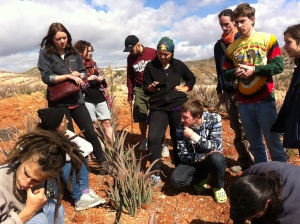
On Friday 7th March we paid a visit to our neighbors Bea and Andres and to their project called “Aloe of Sorbas”. Our tour began with an explanation of how and why the couple had begun to plant Aloe Vera. IMG_3115 First of all we took a walk around the plantation whilst they recounted to us the many steps that they had taken to secure the financial backing to begin their project- they described to us how it was not easy at all to unearth the funding, but with a lot of motivation and after many battles with governmental organizations, banks etc. they managed to gather just enough money to begin the project. IMG_3108 They led us around the landscape where we came across stunning canyons and fields chock-full of natural plants and herbs such as broom, thyme and esparto straw.   We also came across the faces of many animals that inhabit the land- wild goats, rabbits, foxes, the Mora turtle which is in danger of extinction, etc. Tortuga Mora, en peligro de extinción. The couple told us of their plans to one day move and live on their finca (ranch/plantation)- with the intention of experimenting with their own elevated vegetable patches, abode construction, drylands, retaining walls made with tyres, solar systems to extract water and dry stone foundations, on which they want to place a small house made from adobe and pallets. Bancales elevados Aloe de Sorbas We then got stuck into their Aloe Vera project- we traced the lines and lines of Aloe Vera plants and were told about the different types of soil that they have on the plantation. They bought the Aloe plants, ecologically certified, in September 2012, at around 3-4 years of age- at this age the plants already contain all the necessary properties for their commercialization. IMG_5744 On the plantation there is a drip irrigation which makes optimal use of the water that is extracted from the well- each plant needs around 0.8-1 litres of water per day. In winter however they stop using the irrigation system. The plantation method that is used at ‘Aloe of Sorbas’ is constructed of two separated lines of plants, with a distance of one meter between each plant and 3 meters between the lines. Both the irrigation system, the use of wild herbs, the use of fertilizer that comes from the neighbors goat and the deep respect shown for the specific geography of the region all make this project unique- demonstrating high levels of conscientiousness for our environment. IMG_4896   The management of the ‘bad herbs’ is also an important point for us. In ‘Aloe of Sorbas’ it is thought that respecting the natural foliage that grows on the plantation is a good way to improve the composition of the earth and the life of the plant. Each year Andres and Bea do an intervention to cut the wild herbs that grow between the plants- it is done with a weeding machine that spreads the cuttings on the ground to decompose and provide nutrients and shade for the earth. The cutting of the weeds is done in summer with the intention that they have finished their phase of flowering, both helping the bees and other insects, and also providing food for the local goats that eat the green herbs before summer starts. IMG_3125   During this visit we even learned how to cut open the leaves and extract the shoots which we then replanted in a zone called “the nursery”, so as to continue the process of regenerating their plantation without the need to buy new plants. IMG_3166   We would like to give thanks to ‘Aloe of Sorbas’ for giving us the opportunity to learn more about their amazing project- it was very interesting and enriching in every way. It allowed us to learn more about the basic benefits of Aloe Vera, so much so that here at Sunseed we will be hosting a workshop on how to extract the gel from the plants! Many thanks Andres and Bea for sharing your knowledge, we are greatly looking forward to the workshop!El Viernes 7 de Marzo hicimos una visita a nuestros vecinos que llevan el proyecto llamado “Aloe de Sorbas”, en la visita nos explicaron como y porque empezaron su plantación de Aloe Vera. IMG_3115 La visita empezó dando una vuelta por los terrenos donde nos explicaron todos los pasos que tuvieron que seguir para conseguir la financiación para empezar el proyecto, no fue nada fácil conseguir el dinero para arrancar con él, pero con mucho tesón y voluntad y después de pelearse con todos los órganismos gubernamentales, bancos, etc, conseguieron el poco dinero que necesitaban para empezar el proyecto. IMG_3108 Nos enseñaron el entorno donde nos encontramos rodeados de impresionantes barrancos, plagados de plantas endémicas como son las retamas, espartos, tomillo, etc. IMG_1999 Pudimos encontrar rastros de los animales que habitan los terrenos, cabras salvajes, conejos, zorros, jinetas, tortuga Mora, etc… Tortuga Mora, en peligro de extinción. Tortuga Mora, en peligro de extinción. También nos enseñaron su proyecto para mudarse a vivir a la finca, con su huerto con bancales elevados, construcciones con adobe, water seco en construcción, muro de contención con neumáticos, el sistema solar para extracción de agua y los cimientos de piedra seca donde ubicaran una caseta construida con palets y adobe. Bancales elevados Aloe de Sorbas Bancales elevados Aloe de Sorbas Después de todo esto se metieron  de lleno en la plantación de Aloe Vera, recorrieron las calles donde están plantadas y nos enseñaron el comportamiento del Aloe Vera con los distintos tipos de suelo que tienen dentro de la plantación. En la plantación de Aloe de Sorbas compraron las plantas en septiembre de 2012 con certificado ecológico y con 3-4 años de edad para empezar a producir lo antes posible, con esta edad las plantas de Aloe Vera ya contienen todas las propiedades necesarias para su comercialización. IMG_5744 En su plantación disponen de riego a goteo para optimizar el agua que extraen de un pozo con un sistema solar, las cantidades de agua que recibe cada planta ronda los 0,8Litros/día con un máximo de 1Litro/día por planta, parando el riego en los meses de invierno. IMG_4896 El marco de plantación que usan en Aloe de Sorbas se estructura en bloques de dos filas separadas entre sí 1 metro y cada bloque de filas separadas 3 metros. Las plantas están enfiladas a una distancia de 1 metro entre sí. El sistema de riego, la utilización de las hierbas silvestres, la utilización del abono de las ganaderos vecinos que les facilitan el abono de cabra y el respeto por la geografía de la plantación hacen su proyecto único, respetando al máximo nuestro entorno. Plantación Aloe de Sorbas El manejo de las ¨malas hierbas¨ es un punto importante para ellos. —En Aloe de Sorbas piensan que es importante respetar las hierbas que crecen dentro de la plantación para mejorar la estructura del suelo y su vida. —Se realiza una intervención al año para cortar las hierbas silvestres que crecen entre las plantas, se realiza con una maquina desbrozadora  dejando los restos del corte sobre el suelo para que se descompongan y aporten nutrientes y sombra al suelo. —El corte de las hierbas silvestres se realiza en verano intentando así que todas las hierbas hayan acabado su fase de floración, ayudando a las abejas y otros insectos, también se acercan las cabras salvajes hasta la plantación para alimentarse de estas hierbas mientras están verdes antes del verano. IMG_3125 En la visita que hicimos tambien realizamos trabajos de corte de hojas y extracción de hijuelos que luego plantamos en una zona que llamamos ¨La guardería¨ donde fuimos poniendo los hijuelos de Aloe para ir regenerando su plantación sin necesidad de comprar nuevas plantas. IMG_3166 Queremos agradecer a Aloe de Sorbas por dejarnos conocer mas de cerca su precioso proyecto, fue muy interesante, fue una experiencia enriquecedora en todos los sentidos, pudimos conocer mas a fondo los beneficios del Aloe Vera, tanto es así que volveran a realizar un taller de extracción de gel de Aloe Vera en Los Molinos del Río Aguas dentro del proyecto Sunseed desert technology. Muchas gracias Andres y Bea por compartir toda vuestra sabiduria, os esperamos para realizar pronto el taller de extracción de gel !!!
0

P1000238This week the volunteers got introduced to the wonderful world of Plant Taxonomy by the Organic Garden Team who give free tours on this and many more subjects as well!

P1000238Esta semana los voluntarios tuvieron la oportunidad de aprender algo sobre el maravilloso mundo de la taxonomía de las plantas de la mano del equipo de la Huerta Orgánica, que hizo visitas guiadas de esto y de muchas cosas más!


0

Firstly we harvest some chard, rocket, salt bush, mustard leaves, parsley and parietaria from our beautiful sustainable gardens. hojas.pesto.ingredientesingredientes.pesto We place this all together in a big pot and blend it with plenty of olive oil and lemon juice. pesto.batidora You can add black pepper and toasted nuts (such as almonds, sesame seeds and sunflower seeds) but be warned that the nuts tend to make the pesto go off after a few days. We preserve the pesto using the ‘bain-marie’ method. Firstly we submerge the empty jars in boiling water for about 5 minutes in order to sterilize them. Then using ‘Bain Marie’ we place the pesto inside with a ladle and seal the lids very tightly shut. Afterwards we place the jars upside down in boiling water for 20 minutes and then allow them to cool on a surface. botes.pesto.ready

Primero recogemos un poco de acelga, rúcula, salao, hojas de mostaza, perejil y parietaria de nuestras bonitos huertos sostenibles.

hojas.pesto.ingredientesingredientes.pesto

Lo ponemos todo junto en un recipiente grande y lo batimos con mucho aceite de oliva y zumo de limón.

pesto.batidora

Podemos añadir pimienta negra y frutos secos tostados (como almendras, semillas de sésamo y de girasol) pero os prevenimos que estas semillas harán que el pesto se eche a perder después de unos pocos días.

Preservamos el pesto usando el método del baño maría. Primero sumergimos los botes vacíos en agua hirviendo durante unos cinco minutos para esterilizarlos. Entonces usando el baño maría ponemos el pesto con un cucharón y los cerramos bien con la tapa. Después ponemos los botes boca abajo en agua hirviendo durante 20 minutos y los dejamos enfriar sobre una superficie.

botes.pesto.ready

0

We harvest about 6kg of oranges from our trees next to gardens. In February there are plenty of oranges as they keep growing until April, we have a lot to eat but this type are very bitter so we use them to make marmalades! naranjas Firstly we cut the oranges in to 8 pieces and take out the seeds, placing them in a bowl to use later. After this is done we put all the orange segments in to a big bowl and leave them to soak in water overnight so that they become softer and less bitter. The next day we boil the oranges for one hour with enough water to cover half of them. Next we add 2kg of sugar for 3kg of oranges, but if you want it sweeter you can add more, and we also add the pips because they act as a perfect pectin. We places the pips in a muslin cloth and submerge it in the water, leaving everything to boil for another half an hour. We made 2 different batches- one with cloves and cinnamon and the other with ginger and nutmeg. And then its ready! naranja.cocinando The Orange Marmalade doesn’t need the “Bain Marie” method, it preserves itself quite good, because of the quantity of sugar (almost the same quantity of oranges we add the same quantity of sugar on it) and also the orange’s skin keeps the marmalade for months up to year. ana.mermelada.naranja We submerge the empty jars in boiling water for about 5 minutes in order to sterilize them. Afterwards we put the marmalade in the jars, we shot the lits properly and then leave them upside down until they get cooler the day after. naranja.batiendo.sergio Then they are ready to enjoy the bitter flavor, ready to eat for any moment of the day!!!!. botes.mermelada.de.naranja
0

Today it’s time to make Angel Hair marmalade with our very own Angel Hair vegetables from the gardens. Angel hair has a very hard skin as it comes from the pumpkin family so firstly we have to remove the outer layer and because it is a sunny today we can enjoy doing this outside in our workshop! cabellodeange.fuera After cutting away the skin we chop the vegetables into small chunks, take out the pips and keep them to replant again and exchange with others gardeners. cabello.angel.bol Angel hair is a quite sweet pumpkin but we still added a bit of sugar to it for extra sweetness. We also added cinnamon, lemon rind and some fresh ginger. We leave this all to boil in a big pan for about an hour so that it becomes softer and then we can blend it. cocinando.cabello.angel We preserve the marmalade using the ‘bain-marie’ method. Firstly we submerge the empty jars in boiling water for about 5 minutes in order to sterilize them. Then using ‘Bain Marie’ we place the marmalade inside with a ladle and seal the lids very tightly shut. Afterwards we place the jars upside down in boiling water for 20 minutes and then allow them to cool on a surface. It tastes so nice mmmmmm, spread on home made bread and enjoy!
0

Sunseed News


Life at Sunseed – Rabbiya Naveed

rabbiya1At the first glimpse, Sunseed appears like a rather ordinary not-so-well maintained place. At Sunseed, we bake our own bread and jams, harvest our own crops, use seasonal fruits only, exploit the solar energy, use urinals and compost toilets, use organic products, recycle our waste, use limited Internet and say goodbye to a chemical-enriched life. For anyone, this package is a bit hard to digest initially. To be honest, I kept delaying using a compost toilet till my intestines gave up. I regret that.

However, in less than three days I had adapted to the lifestyle and started enjoying the tranquility of the place. Sunseed is located in the middle of mountains and caves, and has been blessed with a natural swimming pool which is an absolute delight during the summer. There is no such thing as ‘working’ at Sunseed. What we are assigned is our responsibility and what we do is what we owe to nature. All the staff members and volunteers live like a family in a community with the motto of minimizing the impact on the environment. Sustainability first! 

I can write a w2013-07-05 23.38.19hole journal about my experience at Sunseed and how little bits from every single day have taught me one thing or the other. At the Appropriate Technology Department, I have worked on a few projects like Fuel Gasifiers, Establishment of a Compost Toilet Light System, Maintenance of Solar Panels etc. I always had a strong inclination towards Sustainable Engineering and working on these projects has only strengthened my resolve and reinforced my belief that Engineering techniques can indeed push technological development further whilst staying within the shell of sustainability. I can’t help thinking that if such a lifestyle was implemented on a larger scale, global problems like energy crises could be tackled to a substantial extent.

Sunseed has taught me that every individual has his own niche in the environment and something unique to contribute to the world. It has taught me that writing and speaking about sustainability and environmental conservation is one thing, but taking a step to bring rabbiya6a real change is a completely different ball game. It has taught me to value nature and it’s products and has reinforced the tranquillity of the natural world in my mind. It has taught me that low impact living extends from our kitchens to our toilets and is perfectly viable. All in all, my experience at Sunseed has taught me how to minimise my carbon footprint without compromising on my comfort and ease. 

I already feel guilty by the thought of the lifestyle I used to have. I will always value the time I have spent at Sunseed and given an option, I would’t exchange it for any other opportunity. I would highly encourage everyone to spend some time of their lives dedicated to a similar cause. It will be an extremely vital experience to put things in perspective. I want to thank all the Coordiantors at Sunseed for their guidance and for making all the volunteers believe that ‘Yes, we can!’, all the volunteers who turned out to be amazing friends for the absolutely lovely time I have spent with them, and Chitto for being the best demonstrator one could have.  

rabbiya7

La vida en Sunseed – Rabbiya Naveed

rabbiya1a primera vista, Sunseed parece un sitio bastante corriente y no muy bien cuidado. En Sunseed preparamos nuestro propio pan y mermelada, cultivamos lo que comemos, usamos solo verduras y fruta de temporada, explotamos la energía solar, usamos urinarios y bater seco, usamos productos orgánicos, reciclamos nuestros desechos, usamos internet y decimos adios a la vida llena de qumícos. Para cualquiera, este es un paquete difícil de digerir en principio. La verdad, no quería usar el bater seco hasta que mi intestino no pudo aguantar más. Ahora me arrepiento. Al final, en menos de tres días me había adaptado al estilo de vida y empecé a disfrutar de la tranquilidad del lugar. Sunseed está situado en medio de montaňas y cuevas, y tiene la suerte de tener una poza natural que es una pasada en el verano. En Sunseed no hay lo que llamamos ‘trabajo’. Lo que nos asignamos es nuestra responsabilidad y lo que hacemos es lo que le debemos a la naturaleza. Todos los trabajadores y voluntarios viven como una familia en una comunidad con el fin de minimizar el impacto en el medio ambiente. ¡ante todo sostenibilidad! Puedo escribir un libro entero sobre 2013-07-05 23.38.19mi experiencia en Sunseed y como pequeňas cosas de cada día me han enseňado una cosa u otra. En el Departamento de Tecnología Apropiada he trabajado en unos cuantos proyectos como un gasificador de fuel, instalar luces en un bater seco, mantenimiento de paneles solares, etc. siempre había tenido una clara inclinación hacia la ingeniería sostenible y trabajar en estos proyectos solo me ha servido para reforzar mi convicción y mi creencia de que las técnicas de ingeniería pueden sin duda impulsar el desarrollo tecnológico y a la vez mantenerse en la sostenibilidad. No puedo evitar pensar que si dicho estilo de vida se implementara a una escala mayor, los problemas globales como los problemas de energía se podrían solucionar de forma significativa. Sunseed me ha ensenado que cada rabbiya6indivíduo tiene su especialidad en el entorno y algo unico para contribuir en el mundo. Me ha ensenado que escribir y hablar sobre sostenibilidad y conservacion del medio ambiente es una cosa, pero dar el paso para hacer cambios reales es algo completamente diferente. Me ha ensenado a valorar la naturaleza y sus productos y ha reforzado la tranquilidad del mundo natural en mi mente. Me ha ensenado que la vida de bajo impacto va desde nuestras cocinas a nuestros baňos y es perfectamente viable. En conclusión, mi experiencia en Sunseed me ha enseňado cómo minimizar mi huella de carbono sin comprometer mi confort. Ya me siento culpable por el estilo de vida que solía llevar. Siempre voy a valorar el tiempo que he pasado en Sunseed y la oportunidad que me han dado, no lo cambiaría por nada. Sinceramente anímo a todos a dedicar algun tiempo en sus vidas a alguna causa similar. Será una experiencia extremadamente vital el poner las cosas en perspectiva. Quiero agradecer a todos los coordinadores en Sunseed por su guía y por hacer a todos los voluntarios creer que ¡Sí se puede!, a todos los voluntarios que resultaron ser los mejores amigos por el tiempo tan maravilloso que pase con ellos, y Chitto (el gato) que ha sido el que mejor lo demostraba. rabbiya7
0